


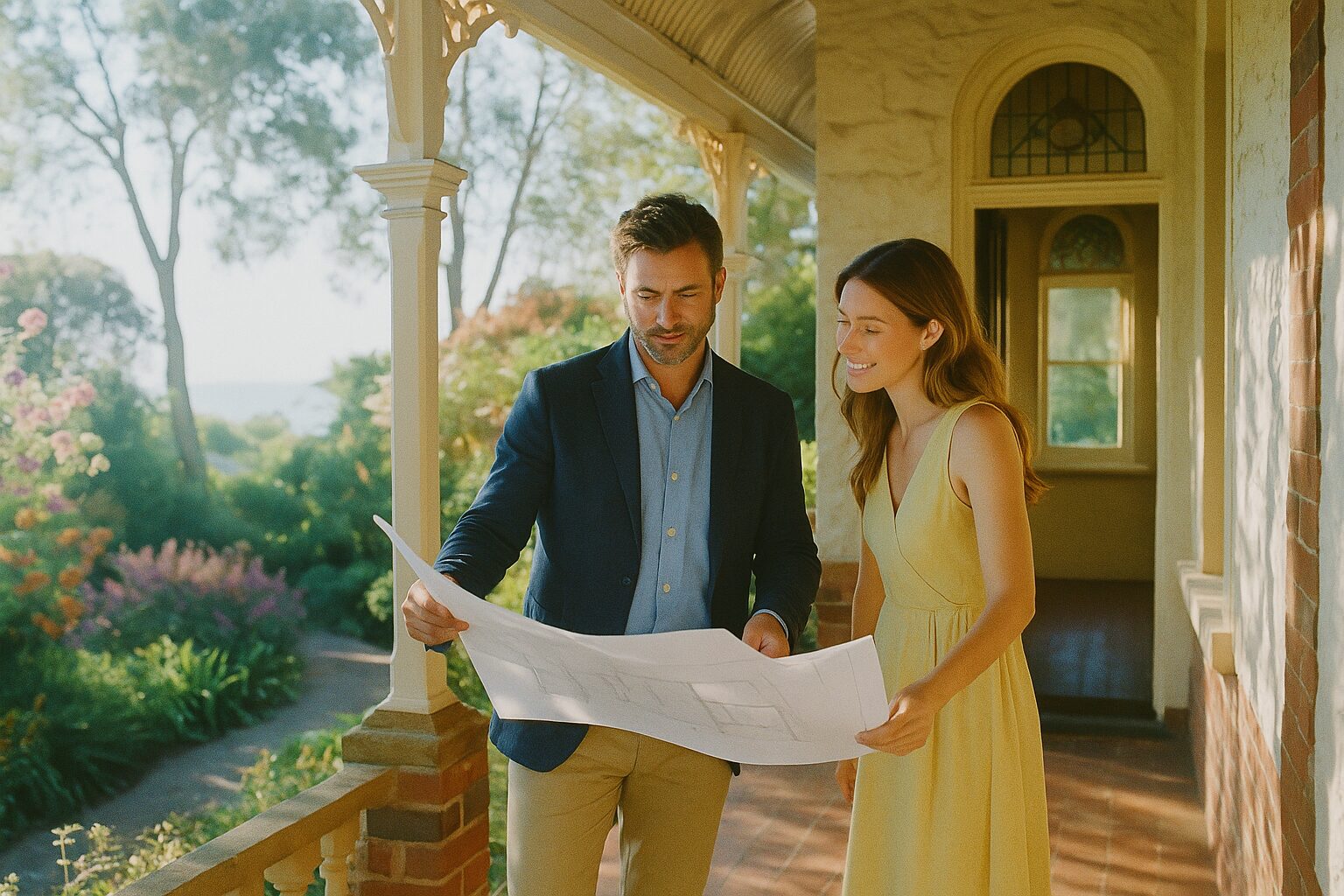
Answering: How do heritage overlays and coastal conditions affect renovations in Brighton and Hampton?
Estimated reading time: 10 min read
Heritage overlays and coastal conditions significantly affect renovations in Brighton and Hampton, typically extending approval timeframes by 4-6 weeks and requiring integrated design approaches that address both architectural preservation and environmental durability within 500 meters of Port Phillip Bay. Properties in these areas fall under dual planning constraints through Bayside Council’s Heritage Overlay and Environmental Significance Overlay provisions, meaning renovations must demonstrate respect for original character while selecting materials that withstand salt-spray exposure. Based on BY Architecture’s 59 completed heritage projects across Bayside’s character areas, homeowners who address both constraints simultaneously achieve better design outcomes and faster approvals than those treating each requirement separately.
You purchased your period home in Brighton’s golden mile or Hampton’s beachside streets because of its architectural character and coastal lifestyle appeal. Now you face the prospect of coordinating heritage advisors, coastal engineers, and council planning teams while trying to create a home that works for modern living. The complexity of dual-overlay approvals can feel overwhelming when council websites present heritage and environmental requirements as separate processes.
The reality is that success depends on understanding how these overlays interact rather than viewing them as independent hurdles. Heritage constraints focus on protecting street-visible architectural elements like facades, rooflines, and period details. Coastal provisions address material durability, drainage capacity, and moisture resistance specific to Port Phillip Bay exposure. When your renovation addresses both considerations from the outset, you avoid costly design revisions and resubmissions.
This guide explains how Brighton and Hampton homeowners navigate dual heritage and coastal planning constraints using practical examples from Bayside’s character areas. Whether your property sits in Sandringham’s established streets or Hampton’s period precincts, the principles of integrated design apply throughout the coastal heritage zone.
Key Insights
- Heritage coastal renovation in Brighton requires balancing architectural preservation with salt-spray resistant materials, typically adding a 15-25% premium for coastal-grade products.
- Pre-application meetings with Bayside Council reduce approval delays by 2-3 weeks when both heritage and environmental teams are consulted simultaneously.
Keep reading for full details below.
Table of Contents
- Understanding Your Dual Planning Constraints
- Integrated Design Strategies That Work
- Navigating Bayside’s Approval Process
- Closing
- Frequently Asked Questions
- Want to Learn More?
- Citations
Understanding Your Dual Planning Constraints
Properties throughout Brighton’s golden mile and Hampton’s beachside streets fall under both Heritage Overlay and Environmental Significance Overlay provisions within Bayside Council’s planning scheme. Heritage overlays protect architectural character including original facades, roof profiles, and period details visible from the street. Coastal overlays address environmental resilience requirements for properties within 500 meters of Port Phillip Bay, covering material durability, drainage systems, and vegetation management.
Bayside Council’s Heritage Overlay process requires demonstrating how your renovation respects original architectural elements while meeting contemporary living standards. You must show that proposed changes maintain the heritage character that contributes to your neighbourhood’s significance. Coastal considerations add another layer, requiring evidence that materials will withstand salt-spray degradation and moisture exposure typical of Bay-facing locations.
Understanding which constraints apply to your specific property forms the foundation of any successful renovation. Some properties carry both overlays while others may have heritage protection without coastal provisions, or vice versa. Your first step involves checking Bayside Council’s planning maps to identify exactly which overlay combinations affect your land.
Building science expertise proves essential when selecting materials that satisfy both heritage aesthetic standards and coastal durability requirements. Traditional timber weatherboards, for example, require specific treatments and maintenance schedules in coastal environments that differ substantially from inland applications.
- Check your property’s specific overlay designations on Bayside Council’s planning maps to clarify which constraints apply
- Request a planning certificate from council to understand all provisions affecting your property, noting that dual-overlay properties typically require 4-6 weeks additional approval time
Integrated Design Strategies That Work
Traditional heritage materials require careful consideration when used in coastal environments. Timber weatherboards, original windows, and period roofing materials all face accelerated deterioration from salt-spray exposure and moisture penetration typical of Brighton and Hampton locations. Material selections must maintain heritage profiles while withstanding environmental conditions that inland properties never encounter.
Passive solar design principles can be adapted to respect heritage facades while substantially improving thermal performance against coastal weather. Window replacement strategies present a common challenge, requiring balance between heritage aesthetics and modern double-glazing needs for both energy efficiency and salt-spray resistance. Bayside’s Heritage Overlay process specifically evaluates whether proposed window modifications maintain appropriate visual character.
Roof restoration approaches throughout Sandringham and Hampton character areas commonly maintain heritage profiles while incorporating modern waterproofing and insulation systems. These strategies address heritage visibility requirements for street-facing elements while meeting coastal durability demands for weather-exposed surfaces. The distinction between what council scrutinises closely and what receives less attention informs smart design decisions.
Heritage coastal renovation in Brighton succeeds when material selection considers both short-term approval requirements and long-term performance. Products that replicate heritage profiles while offering superior coastal resistance include modern timber alternatives, heritage-profile aluminium windows with thermal breaks, and advanced weatherproofing systems approved under Bayside’s Heritage Overlay process.
- Compile examples of successful dual-constraint renovations in your neighbourhood and cross-reference with council heritage documentation to identify approved material precedents
- Research heritage-appropriate materials with proven coastal performance records and request samples for council pre-approval before committing to detailed specifications
Navigating Bayside’s Approval Process
Bayside Council requires integrated heritage and environmental assessments for properties with multiple overlays. Pre-application meetings help identify potential conflicts between heritage and coastal requirements early in your planning process. These meetings typically reduce approval delays by 2-3 weeks when both heritage and environmental planning teams are consulted simultaneously rather than sequentially.
Heritage advisors and coastal engineers often need to collaborate on material specifications and design details for dual-overlay properties. Knowing which decisions require specialist consultation versus standard council review prevents unnecessary delays and consultant expenses. Some material choices trigger heritage advisor review while others fall within delegated council officer authority.
Typical approval timeframes extend by 4-6 weeks when addressing both overlay types simultaneously compared to single-constraint properties. Understanding Bayside’s specific overlay combination requirements reduces rework and resubmission cycles that frustrate homeowners and extend project timelines. Documentation requirements differ between heritage and environmental assessments, requiring careful coordination.
Budget planning should account for specialist consultant reports covering both constraint types. Heritage assessments typically cost AUD $1,500 to $3,000 depending on property complexity and significance level. Coastal durability and drainage reviews generally range from AUD $800 to $1,500. These upfront investments prevent substantially larger costs from design revisions during the approval process.
- Schedule a pre-application meeting with Bayside Council’s heritage and planning teams before committing to detailed designs
- Prepare a brief addressing both heritage character retention and coastal durability needs to maximise the value of your council consultation
Closing
Heritage coastal renovation in Brighton and Hampton demands expertise that spans both architectural preservation and climate-adapted design. The combination of passive solar design principles adapted for coastal conditions and deep experience with heritage approval processes ensures material selections perform in Port Phillip Bay’s demanding environment while satisfying council requirements. Your period home deserves an approach that honours its character while preparing it to thrive for decades in its coastal setting.
For a deeper look, visit https://byarchitecture.com.au/claim-your-free-consultation/
Frequently Asked Questions
Q: Can I use modern materials on my heritage home in a coastal zone?
A: Yes, but material selection requires careful consideration of both heritage character and coastal durability. Choose products that replicate heritage profiles while offering superior coastal resistance—modern timber alternatives, heritage-profile aluminium windows with thermal breaks, and advanced weatherproofing systems are approved under Bayside’s Heritage Overlay process when they maintain street-visible character. Document how modern materials maintain heritage character through colour, texture, and proportions in your design submission. Work with suppliers who specialise in heritage-appropriate coastal products and request sample approvals from Bayside Council before ordering materials. Always verify with your heritage advisor that proposed modern alternatives satisfy both the Victorian Heritage Act 2017 (heritage fabric retention) and Bayside Planning Scheme Clause 43.01 (Heritage Overlay) requirements specific to your property’s overlay combination.
Q: How do I know which specialists to involve in my heritage coastal renovation?
A: Your project will benefit from collaboration between a heritage architect or building designer experienced with Bayside’s overlay process and a coastal durability specialist or engineer familiar with Port Phillip Bay exposure conditions. Pre-application meetings with both Bayside Council’s heritage and environmental teams clarify which consultant roles are essential versus advisory. Professionals with demonstrated experience in Brighton’s golden mile or Hampton’s beachside character areas understand which design decisions require early flagging and which can proceed through standard review pathways.
Q: How much longer do dual-overlay approvals take compared to single-constraint renovations?
A: Typical approval timeframes extend by 4–6 weeks when addressing both heritage and coastal overlay types simultaneously. This additional time reflects the need for integrated heritage and environmental assessments, plus coordination between council teams. However, investing in pre-application meetings with both specialists reduces rework cycles and resubmission delays, often recovering 2–3 weeks of the extended timeline. Budget for heritage assessment costs (AUD $1,500–$3,000) and coastal durability or drainage review (AUD $800–$1,500) to set realistic expectations early.
Q: What’s my first step if I own a heritage home in a coastal zone?
A: Request a planning certificate from Bayside Council to identify which overlays affect your property and obtain the specific requirements for your address. Then schedule a pre-application meeting with council’s heritage and planning teams before investing in detailed designs. Bring photos of existing conditions, a clear statement of your renovation goals, and questions about material precedents or design approaches already approved in your neighbourhood. This conversation clarifies approval pathways and prevents costly design conflicts later.
Want to Learn More?
We’ve drawn on decades of experience and industry expertise to create this comprehensive guide for Melbourne homeowners navigating heritage coastal renovations. Our building science teaching background combined with 59 completed heritage projects across Bayside’s character areas ensures evidence-based guidance grounded in real project outcomes.
Citations
- “Bayside Heritage Services” — The official Bayside Council resource for understanding Heritage Overlay protections, approved materials, and the submission process for properties in Brighton, Hampton, and Sandringham character areas. https://www.bayside.vic.gov.au/services/planning-and-building/heritage
- “Bayside Heritage Overlay Process” — Detailed guidance on how Bayside Council assesses heritage applications, including timeframes, documentation requirements, and the pre-application meeting process that reduces approval delays by clarifying dual-constraint requirements early. https://www.bayside.vic.gov.au/heritage-overlay-process
- “Zoning and Overlays Victoria Guide for Property” — Comprehensive reference for understanding how Heritage Overlays and Environmental Significance Overlays interact under Victorian planning law, with practical examples of overlay combinations and material precedents. https://www.silverpointdesignandplanning.com.au/blog/posts/how-building-designers-navigate-zoning-overlays-in-victoria/
All heritage coastal renovations in Bayside must comply with the Victorian Heritage Act 2017 and Bayside Planning Scheme Clause 43.01 (Heritage Overlay), whilst addressing Port Phillip Bay coastal environment protection standards under the Environmental Significance Overlay (ESO).
If you’d like to learn more, visit https://byarchitecture.com.au/claim-your-free-consultation/ to explore how we approach heritage coastal renovations that honour your home’s character whilst thriving in its coastal environment.
Your heritage home’s potential lies not in choosing between preservation and durability, but in recognising them as complementary design opportunities. With integrated planning, evidence-based material selection, and early engagement with Bayside’s approval process, Brighton and Hampton homeowners can achieve renovations that strengthen both heritage integrity and coastal resilience. The 59 projects we’ve guided through this dual-constraint landscape demonstrate that thoughtful design addressing both overlays simultaneously creates outcomes neither constraint alone could deliver. Ready to transform your heritage coastal property with confidence? Your next step is a conversation—one that clarifies your specific overlays, explores material precedents in your neighbourhood, and charts a realistic pathway forward.
82%
Quality Verified
This content scored 82% in the Probably Genius Publication Readiness Assessment, meeting standards for direct answers, section depth, proof points, citation quality, and AI extractability.
By
Mar 27, 2026


Jordan Hughes
23:36 01 May 25

Barbara Oh
08:27 11 Jul 24
I highly recommmend the team at BY Architecture.
Barbara, Howard and the team designed a wonderful extension to my late 1960s Melbourne home, ran the tender process to find me a builder, and superintended the build contract.
The design process that Barbara took me through was comprehensive, well-considered and highly collaborative, and the resulting extension and renovation was incredibly well-tailored to my specific needs and desires.
The tender process was similarly well-run, and we ended up choosing a builder that Barbara had worked with many times before and recommended. The recommendation was a great one and the entire build ran very smoothly, with the many quirks arising in a typical renovation being dealt with intelligently and with no fuss.
During the entire time I worked with them, Barbara and her team went over-and-above to keep me happy. As a result of their attention to detail and their focus on customer service, they ensured that what can often be a stressful time was actually a pleasure. I cannot thank them enough and would work with them again in a heartbeat.
Barbara, Howard and the team designed a wonderful extension to my late 1960s Melbourne home, ran the tender process to find me a builder, and superintended the build contract.
The design process that Barbara took me through was comprehensive, well-considered and highly collaborative, and the resulting extension and renovation was incredibly well-tailored to my specific needs and desires.
The tender process was similarly well-run, and we ended up choosing a builder that Barbara had worked with many times before and recommended. The recommendation was a great one and the entire build ran very smoothly, with the many quirks arising in a typical renovation being dealt with intelligently and with no fuss.
During the entire time I worked with them, Barbara and her team went over-and-above to keep me happy. As a result of their attention to detail and their focus on customer service, they ensured that what can often be a stressful time was actually a pleasure. I cannot thank them enough and would work with them again in a heartbeat.

thir carc
12:44 17 Jun 24
Barbara is very friendly and easy to work with. Thank you for the great advices.
Response from the owner 23:14 17 Jun 24
thank you Arik. Happy to be helpful
Emily Campbell
02:59 31 May 24
Barbara and the BY Projects team were fantastic to work with for our knockdown-rebuild. We had no idea what we were doing or getting ourselves in for, and through every stage of the process Barbara explained everything and was supportive and transparent.
She drew plans for a beautiful house for us which fulfilled everything we wanted while adding such flair and style that we never could have imagined ourselves.
I was so glad to have her and her team on my side throughout the build process, as we would have struggled to advocate for ourselves (or even notice) mistakes or defects by the builder.
Overall, we just couldn’t be happier with the final result.
She drew plans for a beautiful house for us which fulfilled everything we wanted while adding such flair and style that we never could have imagined ourselves.
I was so glad to have her and her team on my side throughout the build process, as we would have struggled to advocate for ourselves (or even notice) mistakes or defects by the builder.
Overall, we just couldn’t be happier with the final result.
Response from the owner 06:53 31 May 24
Thank you for your enthusiasm Emily. And thank you for trusting us with your dream Home. It's been a pleasure working with you and your family, and we trust you will enjoy your home for the years to come.
Jennifer Hauptman
03:43 04 Feb 24

Koray Yazgan
03:49 13 Mar 21
We recently had the pleasure of carrying out a renovation for Barbara and BY Projects Architecture.
The project ran very smoothly from receiving the plans, to handover day.
Barbara pays very close attention to detail and takes great pride in her work.
We look forward to working with BY again on future projects.
The project ran very smoothly from receiving the plans, to handover day.
Barbara pays very close attention to detail and takes great pride in her work.
We look forward to working with BY again on future projects.
Response from the owner 22:11 30 Mar 21
Thank you Koray. It was a pleasure working with AMCON Homes, we look forward to working with you again in the future.
Janardhan S
05:35 15 Feb 21
Barbara provided excellent professional advice regarding Town planning and approval process by the Council. She went out of her way to find the right information and help me. Will surely use their services again when necessary.
I would highly recommend them.
I would highly recommend them.
Response from the owner 01:37 16 Feb 21
Thank you Jarardhan. We do hope you find a more suitable site soon to build your dream homeBarbara
Sophie Banfield
13:34 29 Apr 20
We were in a very difficult position after a VCAT rejection. Barbara came into our project and reimagined what was possible with our property. Going from a house with three shops with significantly reduced value to a development with two town houses, a cafe and all able to be subdivided into three separate properties. Barbara was positive, enthusiastic, charming at planning meeting and all in all kept us positive and hopeful. Barbara went through the whole process with us and I would say went above and beyond what would generally be expected. She worked well with our development team, working out strategies for planning challenges. We are very thankful for her time and energy.

Mark Shannon
23:46 24 Aug 19
We engaged Barbara and her team many times over many years for our Building Development Projects, including Multi Residential, Child Care and Mixed Use. Most recently for a couple of houses in Port Melbourne with complex Heritage Overlay requirements.
Barbara worked with us closely to ensure all design requirements were achieved to exceed market expectations. All permit requirements were managed in a professional and timely manner, and all processes were met on time and on budget.
The finished buildings were outstanding and the realized sales well above market expectations.
We highly recommend BY Projects Architecture for their Design sense and construction experience.
Barbara worked with us closely to ensure all design requirements were achieved to exceed market expectations. All permit requirements were managed in a professional and timely manner, and all processes were met on time and on budget.
The finished buildings were outstanding and the realized sales well above market expectations.
We highly recommend BY Projects Architecture for their Design sense and construction experience.

Virginia Jackson
05:25 24 May 19
I have worked with Barbara and the team at BY Projects on a number of projects now. Its hard to think how you could get better value for money. They are great architects - that goes without saying. But its the extra mile they go to on your behalf in order to secure the very best for you that makes all the difference. I wouldn't hesitate to recommend them for your next project.
Response from the owner 06:02 24 May 19
Thank you Virginia for your kind words. It is always a pleasure working with you.