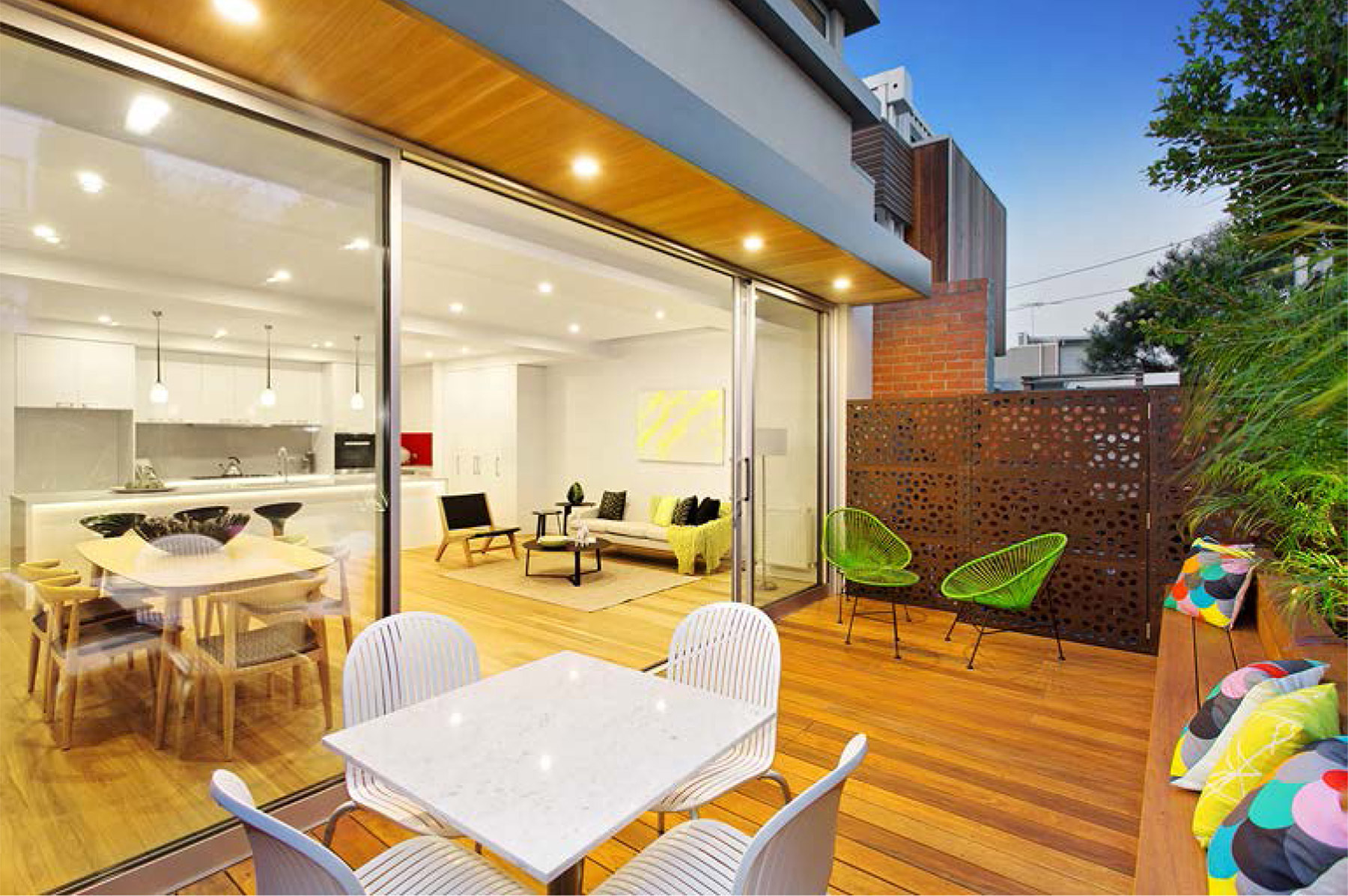
Answering: What do heritage officers in Melbourne object to, and how does good design answer it?
Estimated reading time: 9 min read
Heritage officers across Melbourne’s inner-east, in councils such as Boroondara, Stonnington and Bayside, tend to object to the same handful of things: an addition that competes with the original house in scale or siting, materials and detailing that do not sit comfortably with the period, visual bulk that dominates the streetscape, and changes to the front of the property that erode its heritage character. Good design answers each of these by making the new work clearly subordinate to the old. Based on BY Projects Architecture’s 59 heritage approvals across more than ten Victorian councils, the projects that clear cleanly are the ones designed to the property’s heritage grading from the first sketch, not argued for afterwards.
If you own a significant period home, you have probably heard that heritage approval is unpredictable. In practice it is more predictable than it feels, because officers assess against published policy and a statement of significance, not personal taste.
The reality is that most refusals trace back to a small set of recurring concerns. Understand those, design to answer them, and a heritage application becomes a considered conversation rather than a gamble.
This is the thinking we work through before the first line is drawn. Here is what officers look for, and how a well-resolved design responds.
Key Insights
- Heritage officers assess against published policy and the property’s statement of significance, not opinion.
- The most common objections are about scale and siting, roof form, materials, and changes to the front of the property.
- Your home’s grading, significant, contributory or non-contributory, sets how much latitude you have.
- Good design answers objections by keeping additions subordinate, reversible and sympathetic to the original fabric.
| Common objection | Why heritage officers raise it | How good design answers it |
|---|---|---|
| Scale and siting | A new wing or upper level that competes with or overwhelms the original house | Set the addition back and down, so it reads as clearly secondary |
| Roof form and gables | Forms that fight the period reading or obscure original elements (a Stonnington concern) | A recessive roof that leaves the original silhouette intact |
| Materials and detailing | Finishes and colours that do not sit with the era (a Boroondara concern) | A sympathetic palette and honest contemporary detailing, not pastiche |
| Front fences and streetscape | Changes at the front that erode precinct character | Retain the principal facade and setback; design the fence to suit the era |
| Loss of original fabric | Demolition of significant fabric reduces what made the place significant | Retain and repair, and make new interventions reversible where possible |
Keep reading for full details below.
Table of Contents
- How Your Application Is Actually Judged
- The Objections Officers Raise Most
- How Good Design Answers Them
- What This Means for Your Approval
How Your Application Is Actually Judged
A heritage assessment is not a matter of taste. Your council weighs the application against published policy and the property’s own heritage record, which is why two homes in the same street can be treated very differently.
In Boroondara, for example, applications in a Heritage Overlay are assessed against the council’s Heritage Policy at Clause 22.03 of the planning scheme and the Heritage Overlay decision guidelines, taking into account the statement of significance or heritage citation for the place or precinct. Stonnington publishes its own Heritage Design Guidelines to set out how additions and alterations should respond. The common thread is that officers start from a written description of what makes your property significant, and assess whether your proposal respects it.
The single most important factor is your home’s grading:
- Significant: the building matters in its own right, so the original fabric and principal elevations are closely protected.
- Contributory: the building supports the character of a precinct, so the focus is on how changes read in the streetscape.
- Non-contributory: the building does not add to the heritage values, so there is far more latitude.
Across 35-plus years and more than 200 permit applications, the first thing we do is read the citation and the grading, because they tell us where the real constraints sit before a single wall is moved.
The Objections Officers Raise Most
Look across council reports and tribunal decisions and the same concerns recur. They are worth knowing by name.
Scale, siting and visual bulk. The most frequent objection is that an addition is too large, too tall or too close to the street, so it competes with the original house rather than deferring to it. A two-storey rear addition that looms over a single-storey Victorian is a classic trigger.
Roof form and detailing. Stonnington’s guidance flags additions whose high gable forms detract from the original building, and advises that significant architectural elements should not be obscured. A roof that mimics the period badly, or hides the original chimney and parapet line, draws comment quickly.
Materials and colour. Boroondara assessments regularly raise materials and colours that are not complementary to the heritage precinct. Heritage officers are wary of finishes that imitate the old work, and equally wary of jarring contemporary choices with no relationship to it.
The front of the property. Changes within the front setback, including front fences, are sensitive because they shape the public reading of the street. The Boroondara scheme points owners to the National Trust’s fence and gate guidance for appropriate designs.
How Good Design Answers Them
Every one of those objections has a design answer, and the answer is almost always the same principle: let the original house remain the hero.
In practice that means setting additions back from the principal facade and stepping them down in height, so the new work is legible as new but clearly secondary. It means keeping the original roofline, chimneys and parapet readable rather than swallowed by a larger form. It means a restrained material palette that sits beside the period without copying it, and honest contemporary detailing rather than reproduction.
Two further moves carry real weight in 2026:
- Reversibility. Interventions that could be undone without harming significant fabric are viewed far more favourably than permanent loss.
- Sympathetic sustainability. Officers increasingly expect thermal comfort, insulation and solar to be handled in ways that respect the fabric, so good projects integrate performance without scarring the heritage.
This is the heart of our process. With decades of practice behind 59 heritage approvals, our work is to resolve these concerns in the design itself, so the proposal lands as obviously respectful rather than something a heritage advisor has to be talked into.
What This Means for Your Approval
When a design answers the predictable objections up front, the application is far more likely to be supported, and far less likely to be drawn into a contested hearing at the Victorian Civil and Administrative Tribunal.
A standard heritage application is usually advertised, which means adjoining owners can object, and an officer can also raise concerns through a heritage referral. Each unresolved concern is a potential ground for refusal or a condition you may not want. The alternative to a refusal is often a long, expensive review, so the value of getting the design right early is measured in months and tens of thousands of dollars.
The practical takeaway is simple. Read your statement of significance and grading before you design, treat the recurring objections as a checklist to answer, and keep the original house the star of the project. Do that, and heritage approval becomes a process you can plan around. For a deeper look, visit our process page to see how we approach the heritage stage before design begins.
Frequently Asked Questions
Q: What do heritage officers in Melbourne object to most often?
A: The most common objections are about scale and siting (additions that compete with the original house), roof forms that obscure original elements, materials and colours that do not suit the period, and changes within the front setback such as inappropriate fences. Councils like Boroondara and Stonnington assess these against published heritage policy and your property’s statement of significance.
Q: Does my home’s heritage grading change what I can build?
A: Yes, significantly. A significant building has its original fabric and principal elevations closely protected, a contributory building is assessed mainly on how changes read in the streetscape, and a non-contributory building carries far more latitude. Confirming your grading is the first step, because it sets the real constraints before design begins.
Q: How do I avoid a heritage refusal?
A: Design to answer the predictable objections before you lodge. Keep additions subordinate in scale and set back from the front, retain the original roofline and significant fabric, choose a sympathetic material palette, and make interventions reversible where you can. Resolving these in the design is what keeps an application out of a contested VCAT hearing.
Q: Can I still make a heritage home more sustainable?
A: Yes. Heritage approval and good environmental performance are not in conflict. Insulation, draught sealing, glazing upgrades and discreetly placed solar can usually be achieved in ways that respect the fabric, and officers increasingly expect a sympathetic sustainability response as part of a considered design.
Want to Learn More?
With more than 35 years of heritage practice across Melbourne’s councils, BY Projects Architecture treats officer concerns as a design brief, not an obstacle. The result is work that reads as respectful from the first glance.
Citations
- “Heritage Design Guidelines” — City of Stonnington. The council’s published guidance on how additions and alterations should respond to a heritage place, including roof form and the protection of significant architectural elements. https://www.stonnington.vic.gov.au/files/assets/public/v/1/business/heritage-design-guidelines-2017.pdf
- “Heritage” — City of Boroondara. Sets out that Heritage Overlay applications are assessed against the council’s Heritage Policy (Clause 22.03) and the statement of significance, and explains the significant, contributory and non-contributory gradings. https://www.boroondara.vic.gov.au/planning-building/heritage
- “Heritage Issues Summary of Panel Reports” — Planning Panels Victoria. An official summary of the heritage issues that recur in Victorian planning panel and tribunal decisions, including scale, materials and streetscape impact. https://www.planningpanels.vic.gov.au/__data/assets/pdf_file/0013/701221/Heritage-Issues-Summary-of-Panel-Reports-2024.pdf
These are the official Victorian sources behind heritage assessment: each council’s heritage policy and design guidelines, applied through the planning scheme and the statement of significance for your property.
With 35-plus years and 59 heritage approvals across Melbourne’s councils, our work is to answer the heritage question inside the design, so your renovation reads as respectful from the first glance and your home is built for living, not just for the listing.
91%
Quality Verified
This content scored 91% in the Probably Genius Publication Readiness Assessment, meeting standards for direct answers, section depth, proof points, citation quality, and AI extractability.