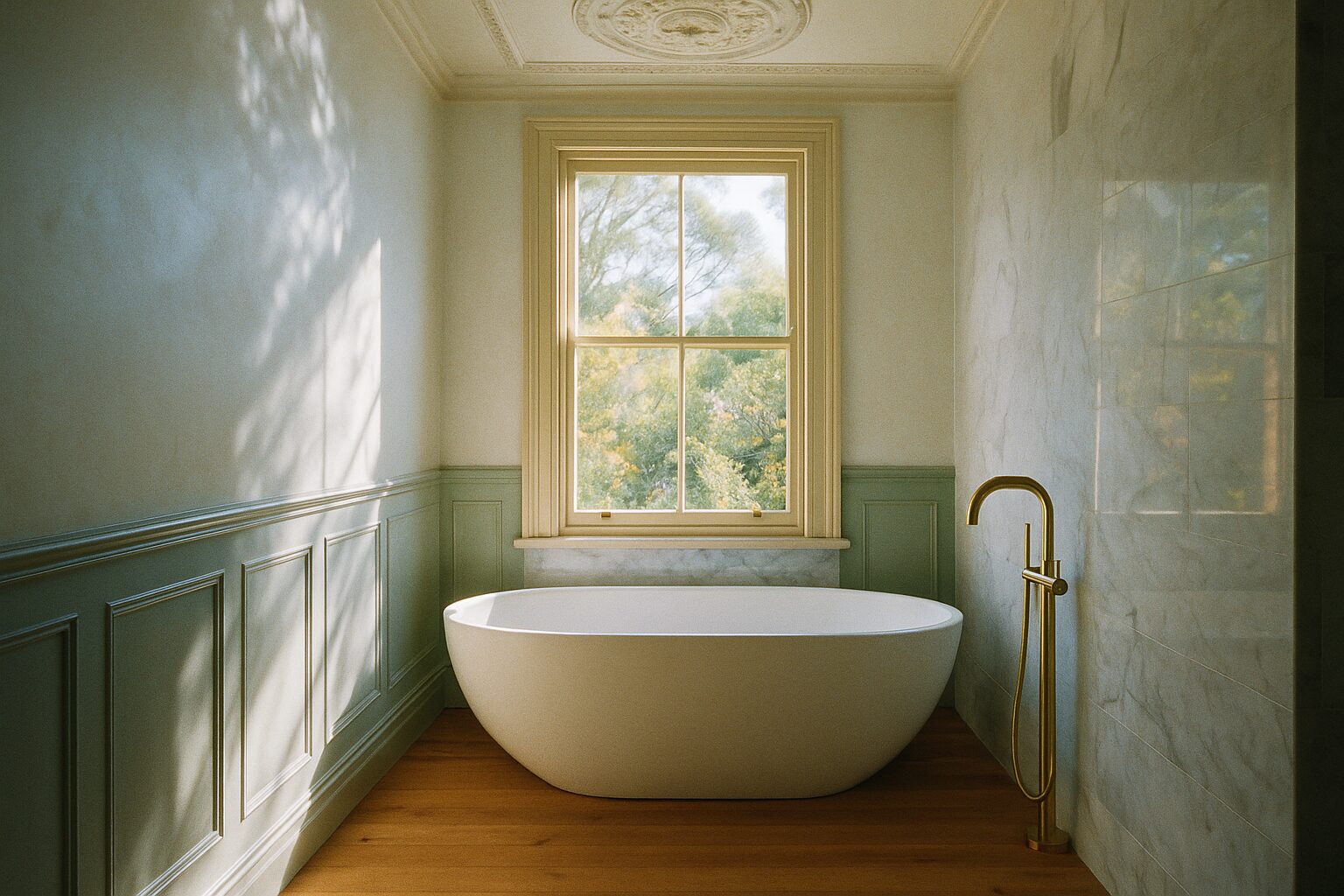
Answering: How do you design luxury bathrooms in Melbourne heritage homes?
Estimated reading time: 10 min read
Designing luxury bathrooms in Melbourne heritage homes requires a building science approach that addresses moisture management, structural reinforcement, and drainage constraints before any aesthetic decisions begin. The process works by first investigating what exists behind original walls, then designing systems that integrate modern waterproofing with period-appropriate finishes that satisfy both heritage overlay requirements and contemporary living standards. Based on BY Projects Architecture’s completion of 59 heritage bathroom projects across 29 Melbourne overlay zones, this investigative approach prevents the moisture damage and drainage failures that typically appear within 6 to 12 months when heritage bathroom renovations skip the building science phase.
You know the frustration of outdated bathrooms that feel disconnected from the rest of your carefully maintained heritage home. Perhaps you have researched renovations only to find conflicting advice about what your council allows, whether your original features can be preserved, and why quotes vary so dramatically. The hidden complexities behind heritage walls create genuine uncertainty about what is actually achievable within your budget and timeline.
The reality is that success depends on understanding your property’s specific constraints before committing to any design direction. Original floor joists in Federation and Victorian homes often require structural reinforcement before modern waterproofing loads can be applied safely. Victorian-era drainage runs at shallow angles that contemporary fixtures can overwhelm without careful hydraulic planning. These factors vary significantly between properties, even within the same street.
Heritage interior integration combined with building science expertise determines whether your bathroom renovation adds lasting value or creates ongoing problems. Across Hawthorn, Kew, Toorak, and Camberwell, the specific requirements depend on your heritage overlay status, your council’s approval thresholds, and the structural condition hidden behind original walls. This guide addresses each consideration so you understand the complete picture before demolition begins.
Key Insights
- Heritage bathroom projects typically require 3 to 6 months for the design phase compared to 4 to 6 weeks for standard bathrooms.
- Budget a 20 percent contingency for discoveries behind walls that standard bathroom quotes miss entirely.
Keep reading for full details below.
Table of Contents
- Understanding Heritage Bathroom Constraints
- Balancing Period Features With Modern Luxury
- Melbourne Suburb-Specific Considerations
- Closing
- Frequently Asked Questions
- Want to Learn More?
- Citations
Understanding Heritage Bathroom Constraints
Original floor joists in Federation and Victorian homes present the most common hidden challenge in heritage bathroom design Melbourne projects. These timbers were sized for the loads of their era, not for modern stone benchtops, freestanding baths filled with water, or the additional weight of contemporary waterproofing membranes. Structural reinforcement identified during the investigation phase prevents the costly moisture damage that appears within months when this assessment is skipped.
Moisture trapped behind heritage walls causes structural failure when ventilation is not integrated during initial design. Original construction assumed natural air movement through gaps and cracks that modern sealing eliminates. Without mechanical ventilation designed specifically for the space, condensation accumulates in wall cavities and ceiling voids, degrading both original fabric and new work.
Council approval requirements depend on heritage overlay status and street visibility rather than simply whether changes are internal. Boroondara, Stonnington, Port Phillip, and Yarra councils each apply different thresholds for requiring heritage advisor reports on bathroom works. A renovation that proceeds without issue in one council area may require extensive documentation in another, even for similar scope.
Building science credentials matter because heritage bathroom failures stem from technical oversights rather than poor material selection. Understanding how moisture moves through original construction, how drainage systems were designed to function, and how modern systems interact with existing fabric determines long-term success.
- Check your property’s heritage overlay status through council planning records before budgeting to understand permit timelines
- Book a building inspection specifically for moisture assessment and structural joist condition before finalising any quotes
Balancing Period Features With Modern Luxury
Wall-hung vanities and discrete ventilation systems preserve period skirting boards and ceiling roses while meeting current waterproofing standards. BY Projects Architecture hand-sketches these spatial possibilities during initial concept phases, capturing how contemporary elements can sit comfortably alongside original features before committing to detailed documentation. This exploratory approach reveals solutions that computer-generated designs often miss.
Underfloor heating requires 75mm minimum clearance that heritage floors rarely provide without subfloor excavation. Modern membrane waterproofing systems were not considered in original construction, so complete subfloor inspection is essential before selecting heating systems. The cost difference between installing heating in a straightforward subfloor versus one requiring excavation can exceed $15,000, making early investigation financially significant.
Period-appropriate materials meeting current Australian Standards can be sourced through specialist suppliers across Melbourne. Reclaimed timber matching original joinery, reproduction period fixtures, and heritage-profile tiles all exist for heritage bathroom design Melbourne projects. Hawthorn and Kew Federation homes particularly benefit from matching leadlight window restoration alongside bathroom works, creating cohesive heritage outcomes while reducing scaffold costs through combined scope.
The hand-drawn approach captures spatial possibilities that digital tools tend to standardise. Every project vision sketched on trace paper ensures the design captures the character of both the existing home and the intended transformation before technical documentation locks in directions.
- Measure existing floor-to-ceiling heights and document which original features warrant preservation versus quality reproduction
- Research period-appropriate waterproofing options through Australian Standards AS 3740 references before contractor discussions
Melbourne Suburb-Specific Considerations
Hawthorn and Kew Federation homes frequently retain intact leadlight windows that require specialist restoration when bathroom renovations affect adjacent spaces. Combining bathroom upgrades with window work reduces overall project costs through shared scaffold access and creates cohesive heritage outcomes. These suburbs contain some of Melbourne’s most significant Federation housing stock, making heritage bathroom design Melbourne expertise particularly valuable.
Toorak and Armadale luxury conversions typically involve combining smaller original rooms into substantial ensuites. This structural work requires engineer certification, and Boroondara Council requires heritage advisor reports for bathrooms visible from public areas in overlay zones. BY Projects Architecture maintains established relationships across these heritage departments, enabling accurate suburb-specific guidance from initial consultation.
Stonnington properties built before 1960 may contain asbestos in bathroom walls requiring licensed removal before renovation begins. Budget 4 to 6 weeks for testing and compliant disposal before construction can start. This timeline consideration affects overall project planning significantly and catches many homeowners unprepared when discovered during demolition.
Understanding your specific council’s requirements before design begins prevents costly revisions. Port Phillip, Yarra, Boroondara, and Stonnington each interpret heritage guidelines differently, and established relationships with these departments streamline the approval process considerably.
- Contact your council’s heritage department and obtain overlay status and visibility classification before finalising designs
- Budget for asbestos testing if your home predates 1990 and confirm licensed removal requirements before obtaining building permits
Closing
Architecture that respects heritage while delivering contemporary function requires investigation before inspiration. The building science approach ensures your heritage bathroom addresses moisture, drainage, and structural challenges hidden behind period walls rather than simply covering them with attractive finishes. When these technical foundations are resolved correctly, the result is a bathroom that enhances your home’s value while functioning flawlessly for decades.
For a deeper look, visit https://byarchitecture.com.au/our-process/
Frequently Asked Questions
Q: Do I need council approval for an internal bathroom renovation in a heritage home?
A: Check your heritage overlay status first through your council’s property records or planning portal—this is the fastest way to understand approval requirements. Internal changes typically require permits if they alter building structure, move plumbing, or are visible from the street; even internal-only renovations may require heritage advisor input in significant overlay zones. Budget 6–8 weeks for council approval processes in Boroondara, Stonnington, Port Phillip and Yarra. BY Projects Architecture has navigated 59 heritage projects across 29 overlay zones, so consulting with experienced architects in your council area prevents costly permit rejections before demolition begins.
Q: What makes heritage bathroom design different from standard renovations?
A: Heritage bathrooms demand simultaneous attention to three areas: building science (moisture management and structural reinforcement), council compliance (overlay status and visibility rules), and spatial authenticity (preserving period features while integrating modern fixtures). Original floor joists weren’t engineered for modern waterproofing loads, Victorian-era drainage runs at shallow angles that can’t handle contemporary fixtures without hydraulic planning, and ventilation systems must be discrete enough to preserve ceiling roses and cornicing. This complexity is why heritage bathroom projects typically run 3–6 months in design phase alone, compared to 4–6 weeks for standard bathrooms.
Q: How long will my heritage bathroom project actually take from start to finish?
A: Plan for 3–6 months of design and approvals, followed by 12–16 weeks of construction—nearly double the timeline of a standard bathroom renovation. Council inspection requirements, specialist material sourcing (particularly for period-appropriate fixtures and reclaimed timber), and structural verification all extend the build phase. Setting realistic expectations upfront prevents scope disappointment and allows your contractor and council to schedule inspections without rushed timelines that compromise quality.
Q: What’s the first step if I’m thinking about renovating my heritage bathroom?
A: Schedule a consultation with an architect experienced in your specific council area, and come prepared with a brief outlining must-haves versus nice-to-haves for your bathroom. Before that conversation, check your property’s heritage overlay status through your council’s planning records and book a building inspection specifically for moisture assessment and structural joist condition—budget 20% contingency for discoveries behind walls that typical bathroom quotes miss. This groundwork transforms your consultation from vague exploration into a targeted conversation about what’s actually feasible within your budget and timeline.
Want to Learn More?
We’ve drawn on 35 years of heritage restoration experience and building science credentials from RMIT and University of Melbourne teaching to create this comprehensive guide for Melbourne homeowners navigating heritage bathroom design. Our hand-sketched design process captures spatial possibilities on trace paper before committing to detailed documentation, ensuring every project vision reflects the authentic character of your home.
If you’d like to explore what’s possible for your heritage bathroom, visit https://byarchitecture.com.au/our-process/ to discover how hand-drawn concepts can capture spatial possibilities before committing to detailed documentation.
Your heritage bathroom renovation sits at the intersection of building science, council compliance, and authentic design—three demands that separate credible outcomes from costly mistakes. When you understand the hidden constraints behind your period walls, and partner with architects who’ve navigated 29 different overlay zones across Melbourne’s heritage councils, your bathroom becomes not just a functional space but an investment that reflects the character and craftsmanship of your home. The clarity you gain in the early design phase—through hand-sketched concepts and honest conversations about structural realities—determines whether your renovation ages with grace or struggles with moisture and regret. You’re ready to begin whenever you are.
Citations
- “Bathroom Renovation Permits Victoria” — Confirms that internal bathroom alterations in heritage properties require building permits when plumbing or structural elements are modified, and outlines permit pathways specific to Victorian councils. https://dwsbuildingco.com.au/blog/bathroom-renovation-permit-victoria
- “Do You Need Council Approval For Internal” — Details how heritage overlay status and street visibility determine approval requirements, emphasising the importance of checking your specific council’s planning portal before finalising designs. https://urbandesignsolutions.com.au/when-is-council-approval-required-in-qld/
- “What Permits Are Needed For A Kitchen” — Provides context on how structural and plumbing changes in heritage homes trigger council review processes similar to other renovation types, reinforcing the need for early professional consultation. https://focusbuild.au/what-permits-are-needed-for-a-kitchen-renovation/
These requirements align with Victorian Building Authority regulations for wet area waterproofing in heritage buildings and Australian Standards AS 3740 (Waterproofing of buildings – General principles), which govern how moisture is managed in heritage structures without compromising original fabric.
84%
Quality Verified
This content scored 84% in the Probably Genius Publication Readiness Assessment, meeting standards for direct answers, section depth, proof points, citation quality, and AI extractability.