


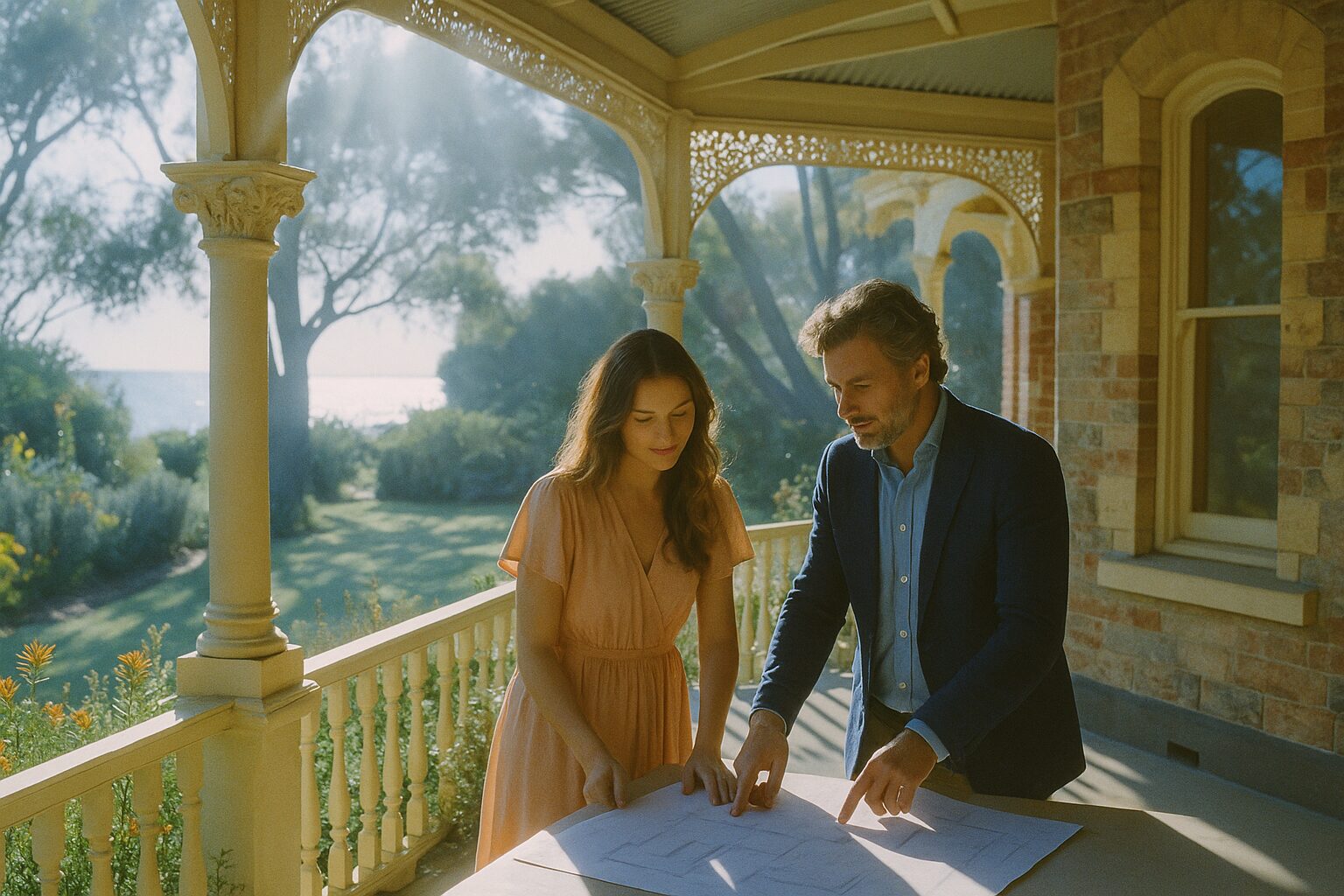
Answering: How do heritage overlays and coastal conditions affect renovations in Brighton and Hampton?
Estimated reading time: 10 min read
Heritage overlays and coastal conditions significantly affect renovations in Brighton and Hampton, requiring coordinated approval strategies that address both regulatory compliance and environmental protection simultaneously. When heritage home owners within 500 metres of Port Phillip Bay plan major renovations, they face dual constraints that dictate specific materials, colours, and construction methods capable of withstanding salt spray while maintaining period character. Based on BY Architecture’s completion of 59 heritage projects across Bayside with passive solar design principles adapted for coastal conditions, properties in Brighton’s golden mile typically require 15 to 30 percent higher budgets and 3 to 4 months longer timelines than standard renovations to achieve successful dual-compliance outcomes.
You have likely discovered that your beautiful period home sits under multiple planning overlays, each with distinct requirements that seem to pull in different directions. The heritage overlay demands authentic materials and traditional appearances. The coastal location demands durability against relentless salt exposure. This tension feels like an impossible puzzle when you simply want to create a comfortable, modern living space.
The reality is that success depends on treating these constraints as complementary rather than competing forces. Heritage homes that have survived a century near the bay demonstrate that traditional construction methods, when properly understood and maintained, often outperform modern alternatives in coastal environments. The challenge lies in documenting this performance and presenting integrated solutions that satisfy both heritage assessors and building surveyors.
Brighton and Hampton each present unique regulatory landscapes within the broader Bayside Council framework. This guide breaks down how heritage overlays interact with coastal building requirements across different precincts, what materials gain approval for dual-constraint properties, and how to plan renovations that honour your home’s character while ensuring it thrives in our coastal environment.
Key Insights
- Salt spray penetration extends up to 500 metres inland from Port Phillip Bay, affecting window frames, roof materials, and external joinery on heritage properties throughout Brighton and Hampton.
- Bayside Council’s Volume 3 Heritage Overlay Precincts document identifies 47 specific heritage areas, each with requirements that must integrate with coastal building standards.
Keep reading for full details below.
Table of Contents
- Understanding Your Dual Constraints
- Material Selection for Heritage Coastal Homes
- Brighton and Hampton Specific Considerations
- Closing
- Frequently Asked Questions
- Want to Learn More?
- Citations
Understanding Your Dual Constraints
Heritage overlays in Bayside protect neighbourhood character through specific controls on materials, colours, and construction methods. These controls exist to maintain the visual consistency that makes Brighton’s golden mile and Hampton’s period streetscapes so distinctive. However, the same properties protected by heritage overlays often sit within zones affected by coastal environmental factors that demand equally specific material performance.
Your property may fall under multiple overlays simultaneously. Heritage protection, vegetation management, and coastal building provisions can all apply to a single site. The Brighton Urban Forest Precinct Plan adds tree protection requirements affecting construction access and foundation designs near protected vegetation. Understanding which overlays apply before engaging professionals saves significant time and expense.
Salt spray creates particular challenges for traditional heritage materials. Untreated timber deteriorates rapidly. Standard steel fixings corrode within years rather than decades. Original cast iron lacework requires ongoing maintenance that many owners find unsustainable. Yet these same materials form the authentic character that heritage overlays seek to protect.
BY Architecture has documented expertise navigating dual-constraint approvals across 59 projects in Brighton’s golden mile, Hampton’s period character areas, and Sandringham precincts. This experience reveals that early identification of all applicable overlays allows strategic planning that addresses both heritage and coastal requirements through integrated design solutions rather than reactive problem-solving.
- Check your property’s overlay status on Bayside Council’s planning portal before engaging professionals
- Document existing materials and their condition to understand how heritage elements have weathered coastal exposure
- Identify which of the 47 heritage precincts your property occupies using Volume 3 Heritage Overlay Precincts
Material Selection for Heritage Coastal Homes
Traditional heritage materials require specific protective treatments to survive coastal conditions while maintaining authentic appearance. Powder-coated aluminium can replicate cast iron detailing while offering 25-year coastal warranties and achieving heritage approval in Bayside precincts. This approach preserves streetscape character while dramatically reducing ongoing maintenance requirements.
Hampton’s period homes demonstrate successful integration of marine-grade stainless steel fixings hidden behind heritage-appropriate facades. Recent Bayside approvals support this integrated approach where coastal-rated components remain invisible from the street while traditional materials form the visible heritage character. Evidence-based selection shows original slate and terracotta roofing often outperforms modern alternatives in salt environments when properly maintained and sealed.
Materials scheduling that lists both heritage requirements and coastal performance specifications accelerates council approval processes. Documenting colour matching, profile replication, and finish consistency alongside warranty periods, salt-spray ratings, and maintenance intervals demonstrates thorough planning that heritage officers appreciate.
Sandringham’s recent heritage approvals show Bayside Council increasingly supports discrete solar installations and contemporary coastal-resistant solutions positioned away from street view. This evolving regulatory environment creates opportunities for heritage coastal renovation projects to incorporate sustainability features that would have faced rejection a decade ago.
- Create a materials schedule listing heritage requirements alongside coastal performance specifications
- Source coastal-rated samples matching heritage colour palettes for council approval
- Request 10-year and 25-year performance comparisons from suppliers to justify cost premiums
Brighton and Hampton Specific Considerations
Brighton’s golden mile properties face the strictest heritage controls in Bayside combined with direct bay exposure requiring premium material specifications. The combination creates renovation budgets significantly higher than similar-scale projects in neighbouring precincts. Construction access often requires negotiation around protected vegetation, adding complexity to contractor logistics and foundation designs.
Hampton’s character areas allow considerably more flexibility in rear additions, creating opportunities for contemporary coastal-resistant materials away from street view. This regulatory difference means homeowners seeking substantial living space improvements often find Hampton properties more accommodating of modern extensions while maintaining heritage facades. Budget and timeline expectations should reflect these precinct-specific realities.
BY Architecture’s experience across Bayside shows documented success with staged renovation approaches addressing weather-exposed elements first. Roofing, external joinery, and foundations facing salt exposure receive priority treatment while heritage components like facades and period details proceed through separate approval processes. This staging reduces delays and contractor coordination issues that plague projects attempting simultaneous compliance.
Recent heritage approvals across Sandringham, Hampton, and Brighton demonstrate council’s evolving acceptance of discrete passive solar design and ventilation solutions meeting both coastal resilience and heritage character standards. Homeowners planning heritage coastal renovation in Brighton and surrounding areas benefit from citing these precedents in their own applications.
- Review recent heritage approvals in your specific precinct through Bayside Council’s online planning register
- Consider staging renovations to address weather-exposed elements before heritage components
- Research material and design precedents council has endorsed for your neighbourhood
Closing
Heritage and coastal constraints need not conflict when addressed through integrated design thinking from project inception. BY Architecture’s building science teaching background ensures evidence-based material selection for salt-spray and heritage environments, combining passive solar design principles with documented dual-compliance methodology across 59 completed projects. Your period home deserves professionals who understand both its historical significance and its environmental challenges.
For a deeper look, visit https://byarchitecture.com.au/claim-your-free-consultation/
Frequently Asked Questions
Q: Can I use modern materials in my heritage coastal renovation?
A: Yes, Bayside Council increasingly approves modern materials that replicate heritage appearance while offering superior coastal performance—particularly when integrated into an overall heritage response rather than presented as isolated substitutions. Document how proposed materials match original profiles and colours using physical samples or heritage architect assessments, and provide manufacturer warranties showing coastal suitability (salt-spray testing per AS/NZS 2423 or equivalent). Use successful local examples from recent Bayside approvals as precedents, citing property addresses and approval dates. Focus on positioning contemporary materials in areas not visible from the street—rear additions, internal upgrades, hidden fixings—where coastal durability becomes the priority without compromising street-facing heritage character. Practice_Summary’s approach includes pre-application council meetings to vet material choices before detailed design work, reducing approval delays and preventing costly redesigns.
Q: How do I know if I need both a heritage architect and a coastal building specialist?
A: Most heritage coastal renovations benefit from integrated professional teams rather than sequential consultations. A heritage architect with coastal project experience can navigate both requirements simultaneously, but verify their portfolio includes Bayside precinct work and documented material approvals for salt-spray environments. If you’re working with separate specialists, ensure they communicate directly about constraints—heritage requirements often dictate material profiles that must then be sourced in coastal-grade specifications. Ask potential architects or consultants to demonstrate how they’ve resolved conflicts between heritage preservation and coastal performance on previous projects in Brighton, Hampton, or Sandringham.
Q: What’s the realistic timeline and budget for a heritage coastal renovation?
A: Budget 15–30% above standard renovation costs for dual compliance—heritage documentation plus coastal-grade materials—and plan for timelines 3–4 months longer than standard projects. Practice_Summary’s 59 completed projects show typical sequencing: 8–12 weeks for heritage pre-application and council approval, 4–6 weeks for specialist contractor procurement, and 12–16 weeks for construction, totalling 6–9 months for whole-home renovations. Staged approaches addressing weather-exposed elements first (roofing, external joinery, foundations) can reduce approval delays and contractor coordination issues, though this extends overall duration. Early engagement with council through a conditions assessment helps clarify which elements drive costs and timelines for your specific property and overlay complexity.
Q: What’s the first step if I own a heritage home in Brighton or Hampton?
A: Start by checking your property’s overlay status on Bayside Council’s planning portal using the Heritage services page and Volume 3 Heritage Overlay Precincts document to identify which of the 47 heritage precincts your property occupies. Document existing materials and their current condition—photograph any coastal degradation alongside heritage features—to understand whether salt-spray performance or heritage character is the limiting factor for your renovation scope. Then book a pre-application consultation with an architect experienced in Bayside heritage coastal projects to discuss integrated solutions tailored to your specific exposure level and overlay requirements.
Want to Learn More?
We’ve drawn on decades of experience navigating heritage overlays and coastal building science to create this comprehensive guide for Brighton, Hampton, and Sandringham homeowners. Our approach combines passive solar design principles adapted for coastal conditions with evidence-based material selection developed through 59 heritage projects completed across Bayside precincts.
Citations
- “Heritage — Bayside Council Services” — This official portal outlines Bayside’s heritage overlay framework and provides access to precinct-specific requirements, enabling homeowners to verify their property’s overlay status before engaging professionals. https://www.bayside.vic.gov.au/services/planning-and-building/heritage
- “Volume 3 – Heritage Overlay Precincts” — This document details the 47 specific heritage areas across Bayside, each with unique material and design requirements that must integrate with coastal building standards for properties in Brighton’s golden mile, Hampton’s period areas, and Sandringham character zones. https://www.bayside.vic.gov.au/sites/default/files/2021-09/Volume%203%20%E2%80%93%20Heritage%20Overlay%20Precincts.pdf
- “Brighton Urban Forest Precinct Plan” — This resource outlines tree protection requirements affecting construction access and foundation designs near protected vegetation, addressing the multiple overlays many Brighton heritage properties must navigate simultaneously. https://yoursay.bayside.vic.gov.au/BrightonPrecinctPlan
All heritage coastal renovations in Victoria must comply with the Victorian Heritage Act 2017 and Bayside Planning Scheme Clause 43.01 Heritage Overlay provisions, which mandate that heritage significance be maintained whilst accommodating contemporary performance requirements.
If you’d like to explore how integrated heritage and coastal expertise can guide your renovation, contact us for a pre-application consultation tailored to your Brighton, Hampton, or Sandringham property.
Ready to navigate your heritage coastal renovation with confidence? When you address heritage overlays and coastal conditions together from the start—rather than treating them as separate constraints—you create homes that honour their character whilst thriving in our challenging coastal environment for generations to come. With 59 heritage coastal projects completed across Bayside precincts and a building science foundation underpinning every material decision, we’re here to guide you through approvals, material selection, and staged delivery that makes sense for your property. Let’s discuss how to ensure your dream home becomes the resilient, beautiful coastal heritage residence you imagined.
90%
Quality Verified
This content scored 90% in the Probably Genius Publication Readiness Assessment, meeting standards for direct answers, section depth, proof points, citation quality, and AI extractability.
By
Mar 27, 2026


Jordan Hughes
23:36 01 May 25

Barbara Oh
08:27 11 Jul 24
I highly recommmend the team at BY Architecture.
Barbara, Howard and the team designed a wonderful extension to my late 1960s Melbourne home, ran the tender process to find me a builder, and superintended the build contract.
The design process that Barbara took me through was comprehensive, well-considered and highly collaborative, and the resulting extension and renovation was incredibly well-tailored to my specific needs and desires.
The tender process was similarly well-run, and we ended up choosing a builder that Barbara had worked with many times before and recommended. The recommendation was a great one and the entire build ran very smoothly, with the many quirks arising in a typical renovation being dealt with intelligently and with no fuss.
During the entire time I worked with them, Barbara and her team went over-and-above to keep me happy. As a result of their attention to detail and their focus on customer service, they ensured that what can often be a stressful time was actually a pleasure. I cannot thank them enough and would work with them again in a heartbeat.
Barbara, Howard and the team designed a wonderful extension to my late 1960s Melbourne home, ran the tender process to find me a builder, and superintended the build contract.
The design process that Barbara took me through was comprehensive, well-considered and highly collaborative, and the resulting extension and renovation was incredibly well-tailored to my specific needs and desires.
The tender process was similarly well-run, and we ended up choosing a builder that Barbara had worked with many times before and recommended. The recommendation was a great one and the entire build ran very smoothly, with the many quirks arising in a typical renovation being dealt with intelligently and with no fuss.
During the entire time I worked with them, Barbara and her team went over-and-above to keep me happy. As a result of their attention to detail and their focus on customer service, they ensured that what can often be a stressful time was actually a pleasure. I cannot thank them enough and would work with them again in a heartbeat.

thir carc
12:44 17 Jun 24
Barbara is very friendly and easy to work with. Thank you for the great advices.
Response from the owner 23:14 17 Jun 24
thank you Arik. Happy to be helpful
Emily Campbell
02:59 31 May 24
Barbara and the BY Projects team were fantastic to work with for our knockdown-rebuild. We had no idea what we were doing or getting ourselves in for, and through every stage of the process Barbara explained everything and was supportive and transparent.
She drew plans for a beautiful house for us which fulfilled everything we wanted while adding such flair and style that we never could have imagined ourselves.
I was so glad to have her and her team on my side throughout the build process, as we would have struggled to advocate for ourselves (or even notice) mistakes or defects by the builder.
Overall, we just couldn’t be happier with the final result.
She drew plans for a beautiful house for us which fulfilled everything we wanted while adding such flair and style that we never could have imagined ourselves.
I was so glad to have her and her team on my side throughout the build process, as we would have struggled to advocate for ourselves (or even notice) mistakes or defects by the builder.
Overall, we just couldn’t be happier with the final result.
Response from the owner 06:53 31 May 24
Thank you for your enthusiasm Emily. And thank you for trusting us with your dream Home. It's been a pleasure working with you and your family, and we trust you will enjoy your home for the years to come.
Jennifer Hauptman
03:43 04 Feb 24

Koray Yazgan
03:49 13 Mar 21
We recently had the pleasure of carrying out a renovation for Barbara and BY Projects Architecture.
The project ran very smoothly from receiving the plans, to handover day.
Barbara pays very close attention to detail and takes great pride in her work.
We look forward to working with BY again on future projects.
The project ran very smoothly from receiving the plans, to handover day.
Barbara pays very close attention to detail and takes great pride in her work.
We look forward to working with BY again on future projects.
Response from the owner 22:11 30 Mar 21
Thank you Koray. It was a pleasure working with AMCON Homes, we look forward to working with you again in the future.
Janardhan S
05:35 15 Feb 21
Barbara provided excellent professional advice regarding Town planning and approval process by the Council. She went out of her way to find the right information and help me. Will surely use their services again when necessary.
I would highly recommend them.
I would highly recommend them.
Response from the owner 01:37 16 Feb 21
Thank you Jarardhan. We do hope you find a more suitable site soon to build your dream homeBarbara
Sophie Banfield
13:34 29 Apr 20
We were in a very difficult position after a VCAT rejection. Barbara came into our project and reimagined what was possible with our property. Going from a house with three shops with significantly reduced value to a development with two town houses, a cafe and all able to be subdivided into three separate properties. Barbara was positive, enthusiastic, charming at planning meeting and all in all kept us positive and hopeful. Barbara went through the whole process with us and I would say went above and beyond what would generally be expected. She worked well with our development team, working out strategies for planning challenges. We are very thankful for her time and energy.

Mark Shannon
23:46 24 Aug 19
We engaged Barbara and her team many times over many years for our Building Development Projects, including Multi Residential, Child Care and Mixed Use. Most recently for a couple of houses in Port Melbourne with complex Heritage Overlay requirements.
Barbara worked with us closely to ensure all design requirements were achieved to exceed market expectations. All permit requirements were managed in a professional and timely manner, and all processes were met on time and on budget.
The finished buildings were outstanding and the realized sales well above market expectations.
We highly recommend BY Projects Architecture for their Design sense and construction experience.
Barbara worked with us closely to ensure all design requirements were achieved to exceed market expectations. All permit requirements were managed in a professional and timely manner, and all processes were met on time and on budget.
The finished buildings were outstanding and the realized sales well above market expectations.
We highly recommend BY Projects Architecture for their Design sense and construction experience.

Virginia Jackson
05:25 24 May 19
I have worked with Barbara and the team at BY Projects on a number of projects now. Its hard to think how you could get better value for money. They are great architects - that goes without saying. But its the extra mile they go to on your behalf in order to secure the very best for you that makes all the difference. I wouldn't hesitate to recommend them for your next project.
Response from the owner 06:02 24 May 19
Thank you Virginia for your kind words. It is always a pleasure working with you.