


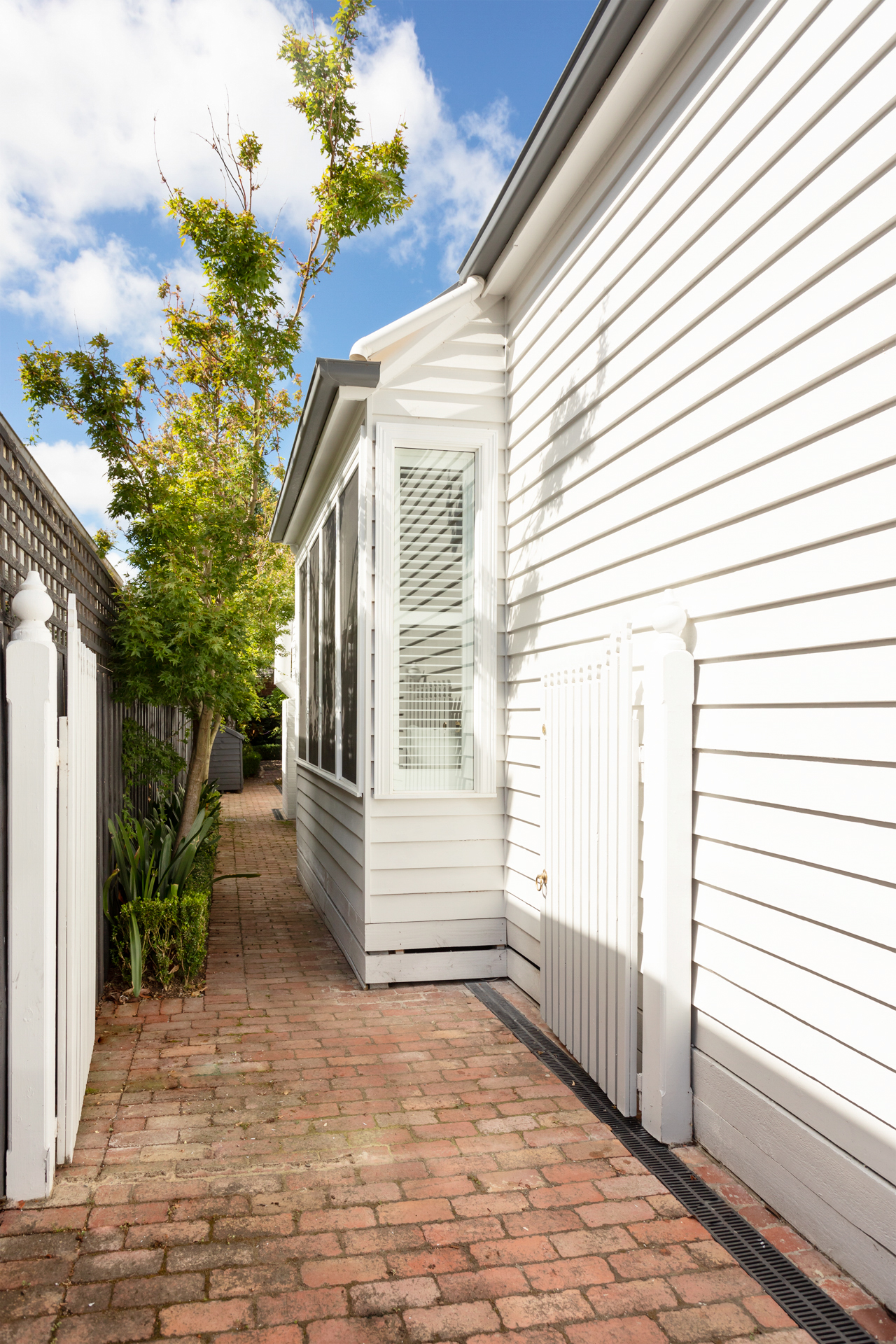
Answering: What should I look for before buying a heritage home in Melbourne?
Estimated reading time: 9 min read
Yes, you should look for structural red flags, heritage overlay restrictions and hidden system costs before buying a heritage home in Melbourne, with thorough inspections potentially saving you $100,000 or more in unexpected restoration expenses. A practical 10-point inspection framework covering Boroondara suburbs like Hawthorn, Kew and Camberwell helps identify what standard building inspections miss on Victorian terraces and Edwardian properties. Based on BY Projects Architecture’s 59 heritage restoration projects across Melbourne, pre-purchase consultations have identified deal-breakers that prevented buyers from inheriting $50,000 to $150,000 in unforeseen costs.
You have fallen in love with that charming Victorian terrace or elegant Edwardian home, and the excitement of owning a piece of Melbourne’s architectural history feels irresistible. The ornate ceilings, original fireplaces and established gardens speak to a quality of craftsmanship that modern homes rarely match. Yet beneath that period charm, significant issues can hide that no standard building inspection will catch.
The reality is that success with heritage home purchases depends on understanding three critical areas: structural integrity specific to period construction, council overlay restrictions that limit what you can change, and hidden infrastructure costs that standard renovations never encounter. Reactive clay soils in Camberwell create foundation problems unlike anywhere else in Melbourne. Heritage overlays in Boroondara can restrict up to 65% of renovation options you might assume are straightforward.
This heritage home inspection checklist Melbourne buyers need covers exactly what to check before signing. We will walk through structural warning signs, overlay traps that change everything, and hidden cost indicators that separate informed buyers from cautionary tales.
Key Insights
- Standard building inspections treat heritage homes like any other property, missing critical issues unique to period construction and council heritage requirements.
- The cost difference between a well-researched heritage purchase and a blind one can exceed $150,000 in hidden restoration work.
Keep reading for full details below.
Table of Contents
- Structural Red Flags Heritage Inspectors Check First
- Heritage Overlay Traps That Change Everything
- Hidden Cost Indicators in Period Properties
- Closing
- Frequently Asked Questions
- Want to Learn More?
- Citations
Structural Red Flags Heritage Inspectors Check First
Foundation movement represents the most common hidden cost in Melbourne heritage homes, particularly in suburbs built on reactive clay soils. Diagonal cracks above windows and doors in Camberwell properties often exceed 40mm of seasonal movement, requiring $15,000 to $40,000 in underpinning work. Standard inspections frequently miss this because assessors lack experience with period construction behaviour.
Original timber stumps beneath Victorian terraces in Hawthorn and Kew hide advanced rot or termite damage that only becomes visible when you lift carpet edges or access subfloors. A simple screwdriver test at each stump location during your heritage home inspection checklist Melbourne walkthrough reveals deterioration that photographs cannot capture. Request subfloor access as a condition of your inspection.
Roof structure sagging indicates failed bearers or inadequate support where modern tile replacements sit on frames originally designed for lighter slate. This structural compromise costs $25,000 to $60,000 to rectify and often prevents installation of contemporary roofing materials you might prefer. Look up from street level before entering any property to assess roofline straightness.
Water damage patterns on ceiling roses and cornices signal ongoing leaks that period plaster will not survive much longer. These repairs typically require $8,000 to $15,000 in remedial work plus associated structural repairs in walls and joinery.
- Request subfloor access and perform the screwdriver test on at least three stumps in different corners
- Measure crack widths in millimetres and photograph them with a coin for scale
- Assess roofline straightness from the street before entering the property
Heritage Overlay Traps That Change Everything
Boroondara’s heritage overlays restrict renovation options including window replacements, extensions and even paint colours requiring council approval. Contributory grading means your neighbour’s existing addition can block your contemporary extension plans due to streetscape consistency requirements. BY Projects Architecture has guided 15 clients through Boroondara overlay restrictions where theoretical possibilities proved impossible in practice.
Internal alterations in heritage zones still require permits if visible from the street, catching buyers who assumed open-plan living conversions were straightforward. That wall you want to remove might need heritage advisor approval even though it sits entirely inside your home. Pre-purchase heritage consultations reveal exactly which changes council will approve versus which modifications will face objections.
Tree protection overlays on heritage properties prevent pool installations or require $30,000 root barrier systems that buyers never budgeted for. Kew and Hawthorn suburbs frequently combine heritage and tree protection overlays that compound renovation restrictions. Section 32 vendor statements often contain vague descriptions missing critical details about permit history.
Council heritage advisors provide free pre-purchase consultations revealing what changes they will actually approve. This step costs nothing but saves $50,000 or more by preventing purchases where your intended use proves impossible under overlay restrictions.
- Check Boroondara’s online heritage grading maps before inspection
- Request the Section 32 early and cross-reference against council documentation
- Book a pre-purchase heritage consultation to confirm what council will actually approve
Hidden Cost Indicators in Period Properties
Original knob and tube wiring hiding in walls requires complete rewiring at $15,000 to $25,000 for a typical Hawthorn terrace. This cost becomes mandatory when you apply for any renovation permit because councils will not approve work on homes with unsafe electrical systems. Photograph the switchboard during your heritage home inspection checklist Melbourne review and note whether safety switches exist.
Lead paint on pre-1970s homes needs specialist removal at $8,000 to $12,000 per room when disturbed during renovations. Most Victorian and Edwardian homes in Hawthorn, Kew and Camberwell automatically trigger lead paint protocols adding time and cost to any interior work. Look for paint crazing or multiple paint layers indicating original finishes.
Galvanised plumbing approaching 80-year lifespan shows through low water pressure and rust stains when first turned on. Replacement costs $20,000 or more and typically becomes necessary within two to three years of purchase. Heritage window restoration costs $2,000 to $3,000 per window when council requires you to retain original joinery, versus $800 for standard replacements you legally cannot install.
- Test water pressure at multiple taps and check for rust staining
- Budget $8,000 to $12,000 for specialist lead paint removal if planning interior renovations
- Request electrical safety certificates before finalising your purchase
Closing
Pattern recognition across 59 heritage projects means understanding what problems hide behind period charm before they become your financial burden. Professional heritage architect assessments identify hidden restoration costs that standard building inspections miss completely. Your charming Victorian terrace deserves informed ownership, not discovery of $100,000 in surprises after settlement.
For a deeper look, visit https://byarchitecture.com.au/claim-your-free-consultation/
Frequently Asked Questions
Q: Can I renovate a heritage home in Melbourne without council approval?
A: No—internal or external changes to heritage properties in overlay zones (including Boroondara’s Hawthorn, Kew, Camberwell and Stonnington’s Malvern, Armadale) require permits, even paint colour selection needs heritage advisor approval. Your first step is checking your property’s specific heritage grading through council’s online maps or your Section 32 statement to understand whether you’re contributory, non-contributory, or registered. Book a free pre-application meeting with council heritage advisors who explain exactly what council will approve for your specific address—this prevents wasted planning effort on impossible scenarios. Work with heritage-experienced architects like BY Projects who know how to frame applications council will approve; this dramatically improves permit outcomes and timelines.
Q: How much should I budget for a professional heritage building inspection before I buy?
A: A specialist heritage building assessment typically costs $1,500–$2,500, which sounds substantial until you realise it prevents $50,000–$150,000 in post-purchase discoveries of unforeseen restoration requirements and overlay complications. Standard pre-purchase building inspections miss the structural issues, hidden systems, and council restrictions unique to period homes—heritage-experienced architects identify these patterns because they’ve seen them across dozens of Melbourne properties. This investment pays for itself within months if it reveals a structural deal-breaker or restrictive overlay that makes the purchase financially unviable.
Q: What’s the timeline for getting council heritage approval for renovations?
A: Council approval timelines range from 8–16 weeks for straightforward applications to 6+ months if neighbours formally object or if your plans conflict with heritage advisor recommendations. Early engagement with council heritage advisors (typically a free pre-application meeting) reveals potential objections before you invest in detailed plans, compressing timelines dramatically. Properties with complex layered overlays (heritage plus tree protection plus contributory grading) often require specialist heritage architects to navigate approval processes—delaying this engagement until after purchase adds months of uncertainty and cost.
Q: How do I start the process of checking a property’s heritage restrictions before making an offer?
A: Your first step takes 15 minutes: visit your council’s website (Boroondara or Stonnington) and check the online heritage grading maps using the street address. Request the Section 32 vendor statement from the real estate agent and cross-reference it against council’s actual documentation—note any previous permit applications or council objections that signal how restrictive the council truly is. Then book a pre-purchase heritage consultation with BY Projects or a heritage-experienced architect who will confirm in writing what changes council will actually approve, not just what guidelines theoretically allow.
Want to Learn More?
We’ve drawn on decades of experience and over 400 completed residential projects—including 59 heritage restorations across Melbourne’s Boroondara and Stonnington councils—to create this comprehensive guide for homeowners considering period homes. Our approach isn’t about selling renovations; it’s about helping you make informed decisions before you commit to a property that might cost far more to restore than you budgeted.
If you’d like to learn more, visit https://byarchitecture.com.au/claim-your-free-consultation/ to explore how we approach heritage home inspection checklists and pre-purchase consultations for Melbourne period homes.
Before you commit to that charming Victorian terrace in Hawthorn or Edwardian beauty in Kew, let’s identify the real costs and restrictions you’re facing. A pre-purchase heritage consultation with BY Projects—informed by 59 completed heritage restorations and 400+ residential projects—surfaces deal-breakers before they become your expensive problem after settlement. You’ll understand exactly what you can and can’t change, what hidden costs you’re inheriting, and whether this property makes genuine financial sense for your family’s long-term plans. That clarity means you’ll buy with confidence or walk away before you’ve signed anything.
Citations
- “Heritage Overlay Restrictions Melbourne – Pearson Chambers” — Confirms the regulatory framework governing heritage overlay restrictions, including council approval requirements and the percentage of renovation options typically restricted in Boroondara’s contributory graded properties. https://www.pearsonchambers.com.au/blog/heritage-overlay-restrictions-melbourne-property-purchase
- “Heritage Overlay Process – Boroondara City Council” — Details the formal approval pathway for heritage properties, including permit requirements, pre-application meetings with council heritage advisors, and the role of neighbouring property objections in extending approval timelines. https://www.boroondara.vic.gov.au/planning-building/planning-and-heritage/heritage/heritage-overlay-process
- “Heritage Overlay Video Guide – Boroondara City Council” — Provides council-endorsed guidance on preparing effective heritage submissions and understanding how contributory grading affects renovation options across Hawthorn, Kew, and Camberwell suburbs. https://www.boroondara.vic.gov.au/media/video/heritage-overlay-preparing-effective-submission
These resources align with the Victorian Heritage Act 2017 and local council heritage overlay provisions that govern all restoration work on registered heritage properties and contributory buildings across Melbourne’s character suburbs.
88%
Quality Verified
This content scored 88% in the Probably Genius Publication Readiness Assessment, meeting standards for direct answers, section depth, proof points, citation quality, and AI extractability.
By
Feb 21, 2026


Jordan Hughes
23:36 01 May 25

Barbara Oh
08:27 11 Jul 24
I highly recommmend the team at BY Architecture.
Barbara, Howard and the team designed a wonderful extension to my late 1960s Melbourne home, ran the tender process to find me a builder, and superintended the build contract.
The design process that Barbara took me through was comprehensive, well-considered and highly collaborative, and the resulting extension and renovation was incredibly well-tailored to my specific needs and desires.
The tender process was similarly well-run, and we ended up choosing a builder that Barbara had worked with many times before and recommended. The recommendation was a great one and the entire build ran very smoothly, with the many quirks arising in a typical renovation being dealt with intelligently and with no fuss.
During the entire time I worked with them, Barbara and her team went over-and-above to keep me happy. As a result of their attention to detail and their focus on customer service, they ensured that what can often be a stressful time was actually a pleasure. I cannot thank them enough and would work with them again in a heartbeat.
Barbara, Howard and the team designed a wonderful extension to my late 1960s Melbourne home, ran the tender process to find me a builder, and superintended the build contract.
The design process that Barbara took me through was comprehensive, well-considered and highly collaborative, and the resulting extension and renovation was incredibly well-tailored to my specific needs and desires.
The tender process was similarly well-run, and we ended up choosing a builder that Barbara had worked with many times before and recommended. The recommendation was a great one and the entire build ran very smoothly, with the many quirks arising in a typical renovation being dealt with intelligently and with no fuss.
During the entire time I worked with them, Barbara and her team went over-and-above to keep me happy. As a result of their attention to detail and their focus on customer service, they ensured that what can often be a stressful time was actually a pleasure. I cannot thank them enough and would work with them again in a heartbeat.

thir carc
12:44 17 Jun 24
Barbara is very friendly and easy to work with. Thank you for the great advices.
Response from the owner 23:14 17 Jun 24
thank you Arik. Happy to be helpful
Emily Campbell
02:59 31 May 24
Barbara and the BY Projects team were fantastic to work with for our knockdown-rebuild. We had no idea what we were doing or getting ourselves in for, and through every stage of the process Barbara explained everything and was supportive and transparent.
She drew plans for a beautiful house for us which fulfilled everything we wanted while adding such flair and style that we never could have imagined ourselves.
I was so glad to have her and her team on my side throughout the build process, as we would have struggled to advocate for ourselves (or even notice) mistakes or defects by the builder.
Overall, we just couldn’t be happier with the final result.
She drew plans for a beautiful house for us which fulfilled everything we wanted while adding such flair and style that we never could have imagined ourselves.
I was so glad to have her and her team on my side throughout the build process, as we would have struggled to advocate for ourselves (or even notice) mistakes or defects by the builder.
Overall, we just couldn’t be happier with the final result.
Response from the owner 06:53 31 May 24
Thank you for your enthusiasm Emily. And thank you for trusting us with your dream Home. It's been a pleasure working with you and your family, and we trust you will enjoy your home for the years to come.
Jennifer Hauptman
03:43 04 Feb 24

Koray Yazgan
03:49 13 Mar 21
We recently had the pleasure of carrying out a renovation for Barbara and BY Projects Architecture.
The project ran very smoothly from receiving the plans, to handover day.
Barbara pays very close attention to detail and takes great pride in her work.
We look forward to working with BY again on future projects.
The project ran very smoothly from receiving the plans, to handover day.
Barbara pays very close attention to detail and takes great pride in her work.
We look forward to working with BY again on future projects.
Response from the owner 22:11 30 Mar 21
Thank you Koray. It was a pleasure working with AMCON Homes, we look forward to working with you again in the future.
Janardhan S
05:35 15 Feb 21
Barbara provided excellent professional advice regarding Town planning and approval process by the Council. She went out of her way to find the right information and help me. Will surely use their services again when necessary.
I would highly recommend them.
I would highly recommend them.
Response from the owner 01:37 16 Feb 21
Thank you Jarardhan. We do hope you find a more suitable site soon to build your dream homeBarbara
Sophie Banfield
13:34 29 Apr 20
We were in a very difficult position after a VCAT rejection. Barbara came into our project and reimagined what was possible with our property. Going from a house with three shops with significantly reduced value to a development with two town houses, a cafe and all able to be subdivided into three separate properties. Barbara was positive, enthusiastic, charming at planning meeting and all in all kept us positive and hopeful. Barbara went through the whole process with us and I would say went above and beyond what would generally be expected. She worked well with our development team, working out strategies for planning challenges. We are very thankful for her time and energy.

Mark Shannon
23:46 24 Aug 19
We engaged Barbara and her team many times over many years for our Building Development Projects, including Multi Residential, Child Care and Mixed Use. Most recently for a couple of houses in Port Melbourne with complex Heritage Overlay requirements.
Barbara worked with us closely to ensure all design requirements were achieved to exceed market expectations. All permit requirements were managed in a professional and timely manner, and all processes were met on time and on budget.
The finished buildings were outstanding and the realized sales well above market expectations.
We highly recommend BY Projects Architecture for their Design sense and construction experience.
Barbara worked with us closely to ensure all design requirements were achieved to exceed market expectations. All permit requirements were managed in a professional and timely manner, and all processes were met on time and on budget.
The finished buildings were outstanding and the realized sales well above market expectations.
We highly recommend BY Projects Architecture for their Design sense and construction experience.

Virginia Jackson
05:25 24 May 19
I have worked with Barbara and the team at BY Projects on a number of projects now. Its hard to think how you could get better value for money. They are great architects - that goes without saying. But its the extra mile they go to on your behalf in order to secure the very best for you that makes all the difference. I wouldn't hesitate to recommend them for your next project.
Response from the owner 06:02 24 May 19
Thank you Virginia for your kind words. It is always a pleasure working with you.