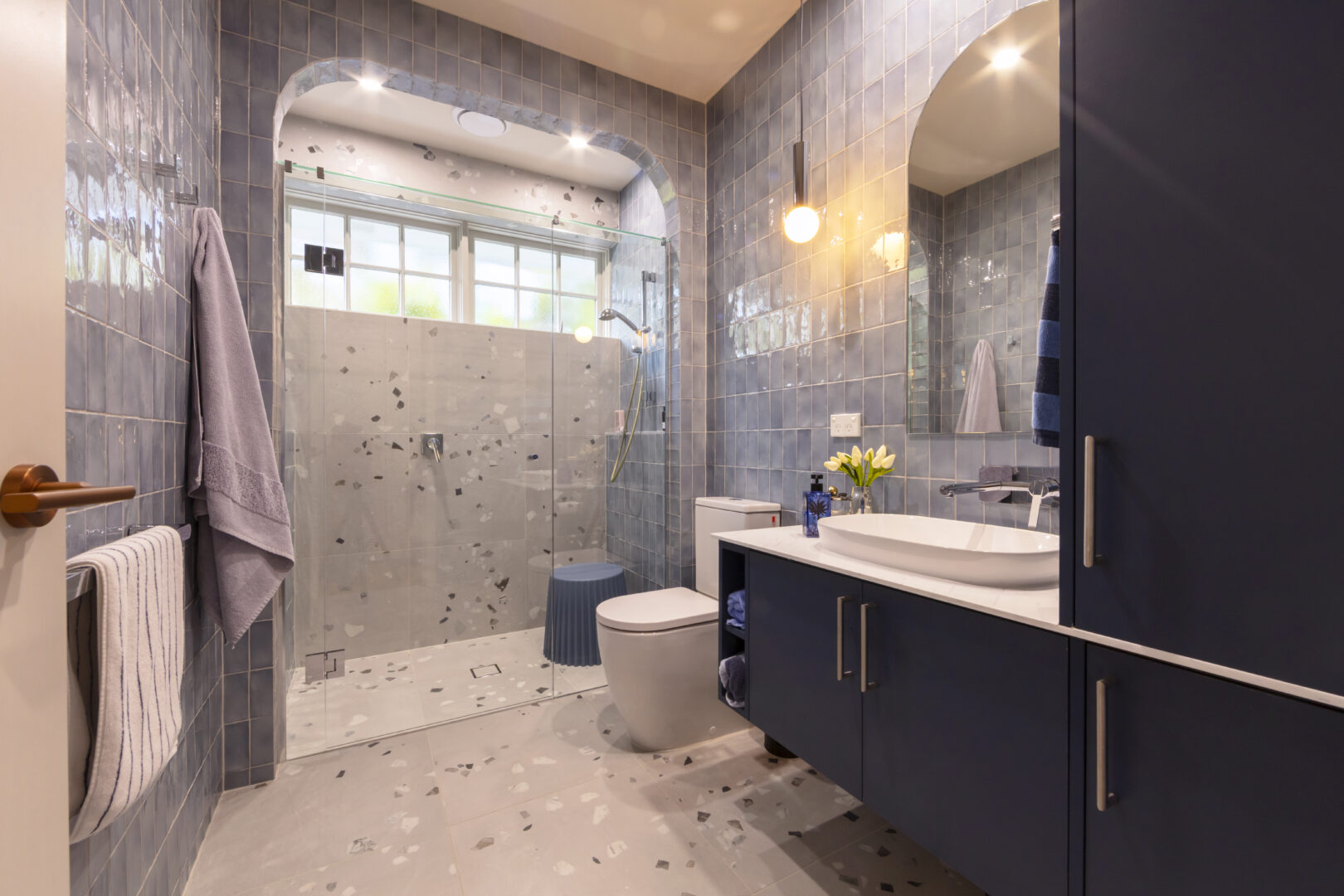
Answering: How do you renovate a heritage home in Williamstown or Newport without harming its character?
Estimated reading time: 9 min read
Salt air, a heritage overlay, and a Federation cottage worth saving — Williamstown asks more of a renovation than most. To extend a period home in Williamstown or Newport well, you work with three forces at once: the Hobsons Bay Heritage Overlay, which means external changes generally need a planning permit; the maritime-village streetscape, which the council assesses your design against; and the coastal environment, which dictates the materials and detailing that will actually last. The reliable approach is a rear or recessive addition that leaves the principal facade and the streetscape reading as they always have, built in materials chosen for salt exposure. Around 7,800 Hobsons Bay properties sit in a Heritage Overlay, most of them in Williamstown, Newport, Altona and Spotswood, so this is the normal condition here, not the exception. Get the heritage and coastal questions right together, at the start, and the home you love stays the home you love.
You did not buy a weatherboard cottage two streets from the bay to turn it into a generic box. You bought the verandah, the timber, the way the street holds together. The fear, quite reasonably, is that the wrong addition devalues a protected building, or that months of work end in a refusal — and that even an approved extension corrodes or weathers badly because nobody designed for the salt.
Those are real risks, and they are avoidable. The trap is treating heritage and the coast as two separate problems solved in sequence. Here they are one problem: a design that satisfies the overlay and survives the environment is a single, integrated decision, taken before the first line is drawn.
This is the part we work through with you before design begins — reading the overlay, the streetscape and the exposure together, so the path is clear and the budget is real. Here is how a Williamstown or Newport heritage renovation actually fits together.
Key Insights
- Most external changes to a home in the Hobsons Bay Heritage Overlay need a planning permit from the council, including additions, demolition and many window or material changes.
- Williamstown and Newport are largely Victorian and Edwardian, with a maritime and railway history — the council assesses how your changes read in that streetscape.
- Successful additions are usually recessive: set to the rear or upper level, secondary to the original dwelling, and respectful of the principal facade.
- Coastal salt exposure shapes material and fixing choices, so heritage detailing and durability should be resolved together, not in sequence.
| Consideration | What it means in Williamstown / Newport | What it asks of the design |
|---|---|---|
| Character & era | Predominantly Victorian and Federation/Edwardian cottages and villas, in a maritime-village setting | Read the original form, scale and detail before adding to it |
| Hobsons Bay Heritage Overlay | Most external works need a planning permit; ~7,800 properties affected across the municipality | A heritage response lodged with the council, assessed against the planning scheme |
| Streetscape | Cohesive rows; the principal facade and front setback carry the precinct’s value | Keep the front reading as it does now; changes sit behind or above |
| Rear-addition scope | Often the most workable place to gain space and light | Recessive, secondary massing that doesn’t dominate the original dwelling |
| Coastal exposure / salt | Proximity to the bay raises the corrosion and weathering category | Salt-rated cladding, fixings and detailing chosen for marine conditions |
Keep reading for full details below.
Table of Contents
- The Character You’re Protecting: Williamstown and Newport
- What the Hobsons Bay Heritage Overlay Actually Controls
- Where the Space Is: Designing a Recessive Addition
- The Coastal Factor: Detailing for Salt and Weather
The Character You’re Protecting: Williamstown and Newport
Before you change anything, it helps to name precisely what gives these suburbs their character, because that is what the council is asking you to keep.
Williamstown is one of Melbourne’s earliest settlements, and its housing reflects a long maritime and railway history. The Williamstown Beach Heritage Precinct, for example, is recognised on the Victorian Heritage Database for demonstrating the late-nineteenth-century land-boom subdivision, with predominantly Victorian and Edwardian houses forming cohesive streetscapes, and for the historical association of its early residents with the maritime and railway industries. Newport carries a parallel story, its streets shaped by the railway workshops and the same era of cottage and villa building.
In practical terms, the dominant building types you’ll be working with are:
- Victorian-era cottages and terraces, often single-fronted, with cast-iron or timber verandah detail.
- Federation and Edwardian villas, with red brick, roughcast, leadlight and broader rooflines.
- Streetscapes that read as a set — where the value lies as much in the row as in any single house.
That last point is the one owners most often underestimate. A heritage precinct is valued partly for its consistency, so an addition is judged not only on its own merits but on how it sits within the rhythm of the street. This is where reading the property correctly at the outset matters. Across 59 heritage approvals and more than ten Victorian councils, our work begins by understanding the original building and its streetscape before proposing a single change — designing to the character, not against it.
What the Hobsons Bay Heritage Overlay Actually Controls
If your home is in the Heritage Overlay — and most period homes in Williamstown and Newport are — the overlay is the system you’ll be working within, so it’s worth understanding what it does and doesn’t require.
The Heritage Overlay (Clause 43.01 of the planning scheme) means a planning permit is generally required to demolish or remove a building, to construct a building or carry out works, and often to externally alter a building or change a fence, roof or significant tree. In Hobsons Bay, the council assesses these applications against its planning scheme and its adopted heritage guidance, including the Guidelines for Alterations and Additions to Dwellings in Heritage Areas. The aim is consistent: changes should respect the significance of the place and its streetscape.
A few practical realities follow from that:
- Many works you might think of as minor — replacing original windows, re-cladding, a front fence, even some solar arrangements — can trigger a permit because they affect the external, visible fabric.
- A narrow set of genuinely minor works to a non-contributory building can take Victoria’s faster VicSmart pathway, which councils must decide within 10 business days. A substantial extension to a contributory or significant home almost never qualifies.
- The consequences of skipping the permit are not trivial. The overlay carries real enforcement, and unauthorised demolition or works in a heritage area can attract substantial penalties under the planning scheme.
None of this is a reason to fear the process — it’s a reason to design with it. Much of what we do is anticipate what a council heritage assessment will look for and resolve it inside the design, so the application is decided cleanly. An architect who reads the overlay and speaks council fluently turns the permit from a hurdle into a sequence you can plan around.
Where the Space Is: Designing a Recessive Addition
The question every owner really wants answered is simple: where can I gain the space and light I need without harming the house? In Williamstown and Newport, the answer is usually at the rear, and usually recessive.
Hobsons Bay’s heritage guidance, in common with heritage practice across Victoria, favours additions that are secondary to the original dwelling: set back, lower or subordinate in scale, and ideally not dominating the principal facade or the view from the street. The original front rooms and elevation are kept and conserved; the new living, kitchen and connection to the garden go behind, where contemporary space can breathe without competing with the heritage frontage.
Here is what “possible” tends to look like on these blocks:
What’s usually possible on a Williamstown / Newport heritage block
- A rear addition that keeps the original cottage or villa intact at the front and adds open living and a garden connection behind.
- A second storey set well back from the front, so the street still reads the original single-storey roofline first.
- Restoration of original detail — verandah, joinery, leadlight — paired with a clearly contemporary, honest new wing rather than a pastiche copy.
- Careful reworking of light and orientation, using the building science behind the design, so the new spaces are comfortable year-round.
The moves to avoid are equally clear: a bulky upper level looming over the streetscape, the loss of the principal facade or front rooms, or a flashy box that ignores the proportions of the original house. The skill is in the join — letting the old and the new each be themselves while the whole reads as one considered home. This is precisely the kind of integration our practice is built around, and it’s the difference between an extension that the council, the street and you can all live with. We design homes built for living, not just photos.
The Coastal Factor: Detailing for Salt and Weather
The factor that distinguishes a bayside heritage renovation from an inner-city one — and the one most often missed — is the salt. Proximity to the bay changes what your materials and fixings have to withstand.
Australia’s National Construction Code sets durability and corrosion-protection expectations that step up in coastal and marine environments, where salt-laden air accelerates corrosion of metals and weathering of finishes. Buildings nearer the shoreline fall into a higher exposure category, which has direct, practical consequences for a Williamstown or Newport home:
- Fixings, flashings and fasteners need to be selected for the corrosion category — marine-grade stainless or appropriately rated alternatives, not standard hardware that will rust.
- Cladding and finishes should be chosen for salt and moisture resistance, and detailed so water and salt drain and dry rather than sit.
- Compatible metals matter: mixing the wrong materials in roofing, gutters and flashings invites accelerated corrosion.
For a timber cottage, this also means respecting how an older building manages moisture — letting it breathe rather than sealing it into a box, so the original fabric you’re protecting doesn’t rot from the inside. This is where Barbara’s background lecturing Building Science at RMIT and the University of Melbourne earns its place: thermal comfort, durability and heritage conservation resolved as one set of decisions. Heritage detailing that ignores the coast fails; coastal detailing that ignores the heritage gets refused. On the bay, you need both at once — which is the whole argument for designing the heritage response and the durability response together, from the first conversation.
Closing
Renovating a heritage home in Williamstown or Newport is rarely about a single decision. It’s about reading the Hobsons Bay Heritage Overlay, the maritime streetscape and the coastal environment correctly, then designing one home that answers all three — a recessive, well-detailed addition that keeps the front of your cottage exactly as the street knows it. For a closer look at how we work through the heritage and feasibility stage before design begins, see our process page.
Frequently Asked Questions
Q: Do I need a planning permit to renovate my heritage home in Williamstown or Newport?
A: In most cases, yes. If your property is in the Hobsons Bay Heritage Overlay — and most period homes in these suburbs are — a planning permit is generally required to demolish, build, or carry out external works, and often to alter external fabric such as windows or a front fence. Around 7,800 Hobsons Bay properties sit in a Heritage Overlay. A narrow set of minor works to a non-contributory building may take the faster VicSmart path, but a substantial extension does not. The first step is confirming exactly how your property is listed.
Q: Can I add a second storey to a Williamstown heritage cottage?
A: Often, but it usually needs to be recessive. Hobsons Bay’s heritage guidance, like Victorian heritage practice generally, favours additions that are secondary to the original dwelling and set back from the front, so the street still reads the original single-storey roofline first. A well-resolved second storey, pushed back and subordinate in scale, can succeed where a dominant upper level looming over the streetscape would not. The design has to answer the streetscape, not just your floor plan.
Q: Does being near the bay change how my renovation should be built?
A: Yes. Proximity to the bay raises the coastal exposure category, and Australia’s National Construction Code expects greater corrosion protection in salt-affected environments. In practice that means marine-rated fixings and flashings, salt-resistant cladding and finishes, compatible metals, and detailing that lets water and salt drain and dry. For an older timber home, it also means letting the building breathe rather than sealing it. Heritage detailing and coastal durability should be resolved together.
Q: How do I extend without harming the character of the home?
A: Keep and conserve the original front of the house — the principal facade, verandah and front rooms — and place the new living space at the rear or in a recessive upper level. Restore original detail, and let the new wing be clearly contemporary and honest rather than a copy. The aim is a home where the old and the new each read clearly while the whole feels considered, designed around how you actually live, on a bayside block.
Want to Learn More?
With heritage architecture experience across Melbourne, BY Projects Architecture treats the overlay, the streetscape and the coast as one design problem, resolved before the first line is drawn. The clearer the constraints at the start, the better the home at the finish.
Citations
- “Heritage Guidelines” — Hobsons Bay City Council. Confirms the council’s adopted guidance for alterations and additions to dwellings in heritage areas, used to assess applications in the Heritage Overlay. https://www.hobsonsbay.vic.gov.au/Services/Planning-and-building/Planning-policies-studies-strategies-and-guidelines/Heritage/Heritage-Guidelines
- “Buildings and works in a heritage overlay (VicSmart)” — Planning Victoria. Lists the minor-works classes eligible for the 10-business-day VicSmart pathway in a Heritage Overlay, such as externally altering a non-contributory building. https://www.planning.vic.gov.au/guides-and-resources/guides/all-guides/vicsmart-permits/accordion/buildings-and-works-in-a-heritage-overlay
- “Williamstown Beach Heritage Precinct” — Victorian Heritage Database. Confirms the precinct’s predominantly Victorian and Edwardian housing, cohesive streetscapes, and the maritime and railway associations of its early residents. https://vhd.heritagecouncil.vic.gov.au/places/22468
- “Part H1 Structure / building durability” — National Construction Code (ABCB). Sets out durability and corrosion-protection expectations that increase in coastal and marine exposure environments, affecting material and fixing selection. https://ncc.abcb.gov.au/editions/ncc-2022/adopted/volume-two/h-class-1-and-10-buildings/part-h1-structure
These are the Victorian and Australian sources that govern a bayside heritage renovation: the Hobsons Bay planning scheme and council heritage guidance for the overlay, the Victorian VicSmart provisions for minor works, the Victorian Heritage Database for the precinct’s significance, and the National Construction Code for coastal durability.
With 35-plus years and 59 heritage approvals across Melbourne’s councils, our work is to read the overlay, the streetscape and the coast as one, so your Williamstown or Newport renovation keeps the character you fell for — and lasts on the bay.
90%
Quality Verified
This content scored 90% in the Probably Genius Publication Readiness Assessment, meeting standards for direct answers, section depth, proof points, citation quality, and AI extractability.