


Answering: What are the best biophilic design ideas for inner Melbourne renovations?
Estimated reading time: 10 min read
Yes, the best biophilic design ideas for inner Melbourne renovations focus on vertical gardens, strategic natural light, transitional spaces, and borrowed nature techniques that work within heritage constraints and tight footprints. These eight practical solutions address the specific challenges of Carlton worker’s cottages, Richmond terrace houses, Fitzroy heritage homes, and Collingwood warehouse conversions where every square metre matters. Based on BY Projects Architecture’s experience across 400+ Melbourne renovations, including 59 heritage projects in inner-north suburbs, homeowners consistently achieve meaningful nature connection without sacrificing floor space or compromising heritage character.
You might be wondering whether biophilic design is even possible in your narrow terrace or compact cottage. The constraints feel real: limited outdoor space, heritage overlay requirements, dark hallways that never see sunlight, and courtyards barely large enough for a barbecue. These are genuine challenges that many inner Melbourne homeowners face when they dream of bringing nature indoors.
The reality is that success depends on choosing the right interventions for your specific property type and heritage status. A Carlton worker’s cottage needs different solutions than a Collingwood warehouse conversion. What works on a north-facing Richmond terrace may not suit a south-facing Fitzroy home. Understanding your property’s orientation, heritage constraints, and existing architectural features determines which biophilic ideas will actually work.
This guide walks you through eight proven approaches for integrating nature into tight footprints across Melbourne’s inner suburbs. We have grouped them into indoor solutions, transitional spaces, and borrowed nature techniques so you can identify what suits your home best.
Key Insights
- Not all biophilic features require renovation. Some solutions like strategic mirror placement and window seat planters can be implemented for under $2,000 and reversed if you sell.
Keep reading for full details below.
Table of Contents
- Indoor Nature Solutions for Heritage Homes
- Transitional Spaces That Blur Indoor-Outdoor Boundaries
- Borrowed Nature Through Smart Design
- Closing
- Frequently Asked Questions
- Want to Learn More?
- Citations
Indoor Nature Solutions for Heritage Homes
Vertical gardens on internal walls represent one of the most effective biophilic solutions for space-constrained Melbourne homes. In Carlton worker’s cottages where hallways measure barely 900mm wide, a wall-mounted green panel adds living texture without consuming precious floor area. These installations require internal wall assessment and confirmation that your heritage overlay permits interior modifications, but they rarely affect external facades that councils protect most stringently.
Skylights above stairwells bring natural light deep into Richmond and Fitzroy terrace houses that typically suffer from dark central corridors. Because stairwells often sit within the original building envelope, skylights here avoid external alterations that trigger complex heritage approvals. Pair these with built-in planter boxes beneath windows that double as storage benches, and you create functional biophilic features within heritage layouts.
Natural materials already present in many heritage homes provide immediate biophilic connection. Exposed brick walls, original timber floors, and stone thresholds link occupants to nature while maintaining character. When reinstated sensitively, these materials comply with City of Yarra and Melbourne heritage overlay requirements. Sometimes the most effective biophilic design involves revealing what your home already offers rather than adding new elements.
To implement indoor nature solutions effectively:
- Measure your highest-traffic areas to identify vertical garden opportunities and note structural load capacity for planters
- Check your suburb’s heritage overlay requirements before planning skylights to avoid costly revisions
- List existing architectural features like fireplaces, original joinery, and brick that could incorporate green elements sympathetically
- Note your home’s aspect to inform plant selection for different light conditions
Transitional Spaces That Blur Indoor-Outdoor Boundaries
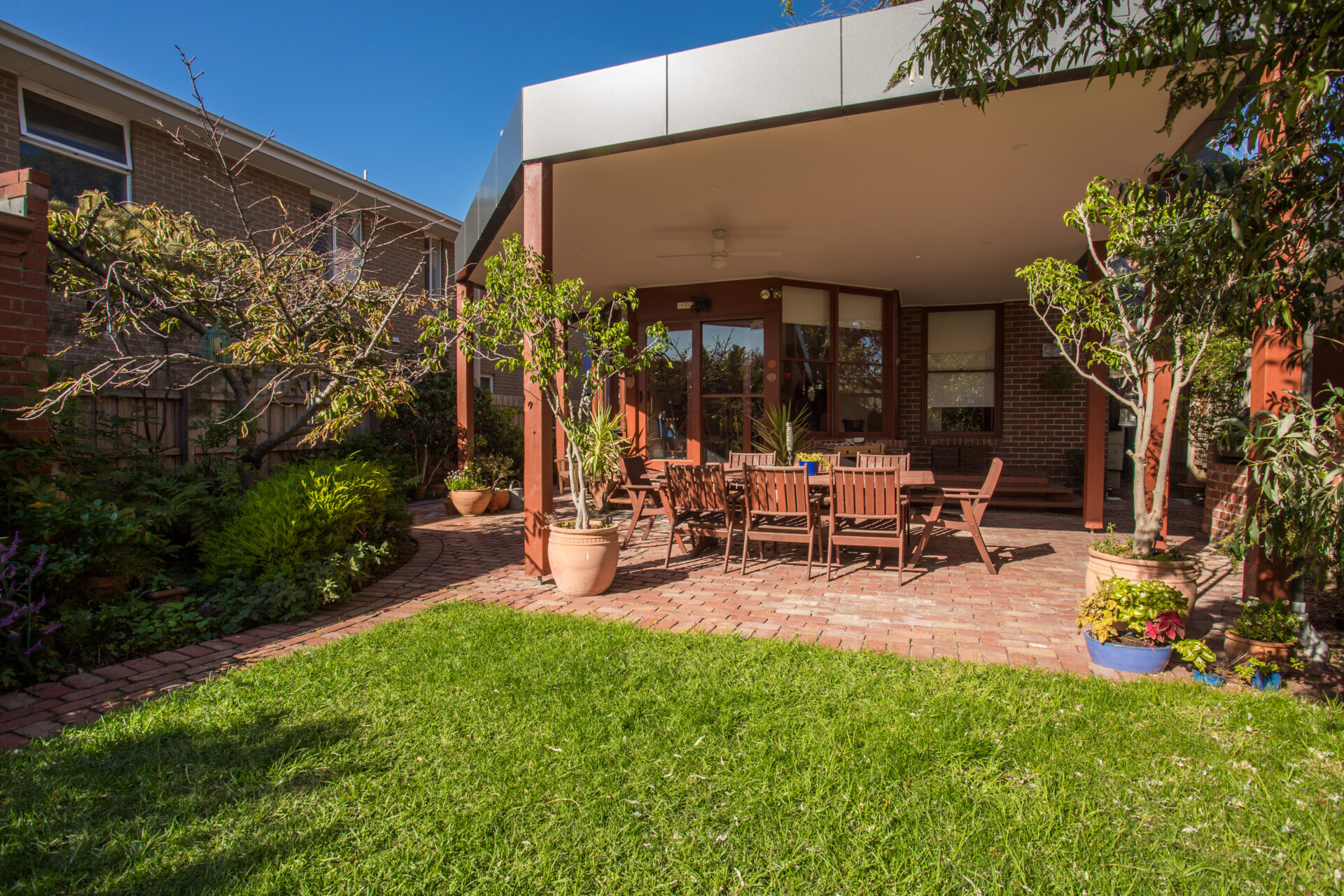
Bi-fold doors opening to small courtyards create flexible living without permanent footprint loss. This approach works particularly well in Collingwood warehouse conversions and Richmond terraces where outdoor space is limited but valuable. Opening the entire wall during mild weather extends your living area into the courtyard, while closing it maintains thermal comfort during Melbourne’s variable conditions. Installation typically costs between $8,000 and $15,000 depending on opening width and frame material.
Glass-roofed side returns bring garden views into Victorian terrace kitchens while preserving original room layouts. BY Projects Architecture has found this intervention particularly successful in Richmond and Fitzroy renovations where side passages receive good natural light. These modifications meet City of Yarra public domain requirements when designed appropriately, and they transform previously dark kitchen spaces into bright areas with year-round garden connection.
Window seats with integrated planters maximise both seating and greenery in narrow terraces. These function as furniture and biophilic feature simultaneously, providing storage beneath while displaying cascading plants at eye level. Because they require no structural changes, window seat planters represent a reversible intervention that heritage councils typically approve without issue.
Operable louvre windows increase natural ventilation in ground-floor conversions without compromising security. Fresh air and outdoor sounds enter habitually through adjustable blades, enhancing sensory connection to nature while maintaining privacy. This solution suits Collingwood warehouse conversions particularly well, where large original openings can accommodate louvre systems within existing frames.
Borrowed Nature Through Smart Design
Strategic mirror placement doubles perceived garden space and reflects neighbouring greenery into dark corners. This cost-effective solution works beautifully in Carlton cottages and Fitzroy terraces with limited outdoor access. A well-positioned mirror on a courtyard wall can make a three-metre space feel twice as large while bringing reflected foliage into your sightlines throughout the day. Installation costs remain under $500 for most applications.
Picture windows framing established neighbouring trees borrow canopy views without maintenance responsibility. This technique connects interiors to Melbourne’s existing urban forest, particularly effective in inner-north suburbs where mature street trees provide substantial greenery. Careful window placement during renovation planning allows you to capture views that enhance daily nature connection without requiring your own garden.
Green roof installations on rear extensions create outlook gardens visible from upper floors. In Richmond and Collingwood, otherwise blank roofscapes transform into living amenity that improves both visual connection and building thermal performance. These installations require structural assessment and irrigation planning, with typical costs ranging from $150 to $300 per square metre depending on plant selection and system complexity.
Living walls on boundary fences transform narrow side passages into green corridors. In inner-north properties where side setbacks measure barely 600mm, a vertical garden on the fence creates year-round natural focal points visible from kitchen windows and back doors. These installations improve air quality and provide the mental health benefits of nature connection even in the most compact homes.
Closing
Bringing nature into your inner Melbourne home is absolutely achievable regardless of floor space constraints or heritage requirements. The eight ideas outlined here demonstrate that biophilic design adapts to worker’s cottages, terrace houses, and warehouse conversions when you choose appropriate interventions for your specific property. Whether you start with a simple mirror placement or plan a more substantial glass-roofed side return, each step strengthens your daily connection to the natural world.
For a deeper look, visit https://byarchitecture.com.au/residential-architects-melbourne/
Frequently Asked Questions
Q: Can biophilic design work in a heritage-listed Melbourne terrace house?
A: Yes—biophilic design enhances heritage homes without compromising character when approached thoughtfully. Focus on reversible interventions first: moveable planters, interior green walls, window seats, and strategic mirrors require no permanent structural changes and comply with heritage overlays in Carlton, Fitzroy, and Richmond. Work within existing openings for natural light improvements—skylights above stairwells, louvre windows, and picture frames are sympathetic to heritage fabric. Choose heritage-appropriate materials like timber, stone, and native plantings that reflect your home’s original context. Consult your local heritage overlay guidelines early (City of Yarra or Melbourne)—BY Projects manages this compliance and has successfully navigated heritage requirements across 59 projects. Many solutions can be implemented with proper planning approval and thoughtful design that respects both nature connection and character preservation.
Q: How much expertise do I need to implement biophilic design myself?
A: Some elements—like placing mirrors strategically or selecting drought-tolerant succulents for window boxes—work well as DIY projects. However, structural interventions like skylights, side returns, green roofs, or living walls require professional assessment to ensure they’re safe, compliant with heritage overlays, and properly integrated with your home’s existing systems. Getting a consultation upfront helps you understand which solutions suit your budget and skills, and which need a structural engineer or architect. We’ve worked with homeowners at every comfort level, from guiding your own planting choices to managing full design-and-build projects.
Q: What’s the typical timeframe for adding biophilic design features to my renovation?
A: Timeline varies significantly depending on the scope and whether heritage approval is needed. Simple reversible interventions like interior green walls or window seat planters can be installed within weeks, while structural changes like skylights or side returns typically require 2–3 months for design, approval, and installation. Green roofs and living wall systems require additional time for irrigation setup and plant establishment. During your initial consultation, we provide a realistic timeline and cost breakdown so you know what to expect before committing.
Q: Where do I start if I want to bring nature into my inner Melbourne home?
A: Begin by documenting your space: photograph your main living areas, measure openings, note light patterns at different times of day, and identify your home’s aspect (north, south, east, or west). Check your suburb’s heritage overlay requirements via City of Yarra or Melbourne City Council online—this tells you which interventions might need approval. Then contact BY Projects for a consultation; we’ll assess your specific property, discuss which biophilic solutions work within your budget and heritage constraints, and create a realistic plan for implementation.
Want to Learn More?
We’ve drawn on decades of experience and 400+ completed Melbourne renovations to create this comprehensive guide for inner-suburban homeowners navigating heritage constraints and tight footprints. Our approach has always been about proving that nature integration and character preservation aren’t competing goals—they’re complementary.
Citations
- “Heritage Design Guide” — Melbourne City Council’s authoritative resource for heritage-sensitive design decisions, including guidance on skylights, materials, and reversible interventions in heritage overlays. https://www.melbourne.vic.gov.au/heritage-design-guide
- “Heritage Overlay” — City of Yarra’s documentation of heritage protection requirements for Carlton, Fitzroy, and Richmond properties, clarifying which modifications require planning approval and which can proceed with sensitivity assessment. https://www.yarracity.vic.gov.au/planning-and-building/heritage/heritage-overlay
- “City of Yarra Technical Notes” — Public domain manual outlining compliance standards for side returns, windows, and external modifications in heritage properties across inner north Melbourne. https://www.yarracity.vic.gov.au/sites/default/files/2024-05/yarra-city-council-public-domain-manual-technical-notes.pdf
These resources align with Victorian Heritage Council guidelines for sustainable heritage adaptation and Melbourne City Council heritage design standards—the frameworks we use to balance nature connection with character preservation on every project.
If you’d like to learn more, visit https://byarchitecture.com.au/residential-architects-melbourne/ to explore how we approach biophilic design ideas for inner Melbourne renovations.
Bringing nature into a compact heritage home isn’t about luxury or extravagance—it’s about making your everyday space healthier, more connected, and more liveable. Whether you’re working with a Carlton worker’s cottage, a Richmond terrace, or a Collingwood warehouse conversion, there’s a practical, budget-conscious solution that respects your home’s character. BY Projects has guided hundreds of homeowners through this process, proving that thoughtful biophilic design works in tight spaces when you plan strategically and understand your heritage requirements upfront. Your home’s story matters—let’s make sure your renovation honours that story while creating the nature-connected living space you deserve.
90%
Quality Verified
This content scored 90% in the Probably Genius Publication Readiness Assessment, meeting standards for direct answers, section depth, proof points, citation quality, and AI extractability.
By
Feb 21, 2026


Jordan Hughes
23:36 01 May 25

Barbara Oh
08:27 11 Jul 24
I highly recommmend the team at BY Architecture.
Barbara, Howard and the team designed a wonderful extension to my late 1960s Melbourne home, ran the tender process to find me a builder, and superintended the build contract.
The design process that Barbara took me through was comprehensive, well-considered and highly collaborative, and the resulting extension and renovation was incredibly well-tailored to my specific needs and desires.
The tender process was similarly well-run, and we ended up choosing a builder that Barbara had worked with many times before and recommended. The recommendation was a great one and the entire build ran very smoothly, with the many quirks arising in a typical renovation being dealt with intelligently and with no fuss.
During the entire time I worked with them, Barbara and her team went over-and-above to keep me happy. As a result of their attention to detail and their focus on customer service, they ensured that what can often be a stressful time was actually a pleasure. I cannot thank them enough and would work with them again in a heartbeat.
Barbara, Howard and the team designed a wonderful extension to my late 1960s Melbourne home, ran the tender process to find me a builder, and superintended the build contract.
The design process that Barbara took me through was comprehensive, well-considered and highly collaborative, and the resulting extension and renovation was incredibly well-tailored to my specific needs and desires.
The tender process was similarly well-run, and we ended up choosing a builder that Barbara had worked with many times before and recommended. The recommendation was a great one and the entire build ran very smoothly, with the many quirks arising in a typical renovation being dealt with intelligently and with no fuss.
During the entire time I worked with them, Barbara and her team went over-and-above to keep me happy. As a result of their attention to detail and their focus on customer service, they ensured that what can often be a stressful time was actually a pleasure. I cannot thank them enough and would work with them again in a heartbeat.

thir carc
12:44 17 Jun 24
Barbara is very friendly and easy to work with. Thank you for the great advices.
Response from the owner 23:14 17 Jun 24
thank you Arik. Happy to be helpful
Emily Campbell
02:59 31 May 24
Barbara and the BY Projects team were fantastic to work with for our knockdown-rebuild. We had no idea what we were doing or getting ourselves in for, and through every stage of the process Barbara explained everything and was supportive and transparent.
She drew plans for a beautiful house for us which fulfilled everything we wanted while adding such flair and style that we never could have imagined ourselves.
I was so glad to have her and her team on my side throughout the build process, as we would have struggled to advocate for ourselves (or even notice) mistakes or defects by the builder.
Overall, we just couldn’t be happier with the final result.
She drew plans for a beautiful house for us which fulfilled everything we wanted while adding such flair and style that we never could have imagined ourselves.
I was so glad to have her and her team on my side throughout the build process, as we would have struggled to advocate for ourselves (or even notice) mistakes or defects by the builder.
Overall, we just couldn’t be happier with the final result.
Response from the owner 06:53 31 May 24
Thank you for your enthusiasm Emily. And thank you for trusting us with your dream Home. It's been a pleasure working with you and your family, and we trust you will enjoy your home for the years to come.
Jennifer Hauptman
03:43 04 Feb 24

Koray Yazgan
03:49 13 Mar 21
We recently had the pleasure of carrying out a renovation for Barbara and BY Projects Architecture.
The project ran very smoothly from receiving the plans, to handover day.
Barbara pays very close attention to detail and takes great pride in her work.
We look forward to working with BY again on future projects.
The project ran very smoothly from receiving the plans, to handover day.
Barbara pays very close attention to detail and takes great pride in her work.
We look forward to working with BY again on future projects.
Response from the owner 22:11 30 Mar 21
Thank you Koray. It was a pleasure working with AMCON Homes, we look forward to working with you again in the future.
Janardhan S
05:35 15 Feb 21
Barbara provided excellent professional advice regarding Town planning and approval process by the Council. She went out of her way to find the right information and help me. Will surely use their services again when necessary.
I would highly recommend them.
I would highly recommend them.
Response from the owner 01:37 16 Feb 21
Thank you Jarardhan. We do hope you find a more suitable site soon to build your dream homeBarbara
Sophie Banfield
13:34 29 Apr 20
We were in a very difficult position after a VCAT rejection. Barbara came into our project and reimagined what was possible with our property. Going from a house with three shops with significantly reduced value to a development with two town houses, a cafe and all able to be subdivided into three separate properties. Barbara was positive, enthusiastic, charming at planning meeting and all in all kept us positive and hopeful. Barbara went through the whole process with us and I would say went above and beyond what would generally be expected. She worked well with our development team, working out strategies for planning challenges. We are very thankful for her time and energy.

Mark Shannon
23:46 24 Aug 19
We engaged Barbara and her team many times over many years for our Building Development Projects, including Multi Residential, Child Care and Mixed Use. Most recently for a couple of houses in Port Melbourne with complex Heritage Overlay requirements.
Barbara worked with us closely to ensure all design requirements were achieved to exceed market expectations. All permit requirements were managed in a professional and timely manner, and all processes were met on time and on budget.
The finished buildings were outstanding and the realized sales well above market expectations.
We highly recommend BY Projects Architecture for their Design sense and construction experience.
Barbara worked with us closely to ensure all design requirements were achieved to exceed market expectations. All permit requirements were managed in a professional and timely manner, and all processes were met on time and on budget.
The finished buildings were outstanding and the realized sales well above market expectations.
We highly recommend BY Projects Architecture for their Design sense and construction experience.

Virginia Jackson
05:25 24 May 19
I have worked with Barbara and the team at BY Projects on a number of projects now. Its hard to think how you could get better value for money. They are great architects - that goes without saying. But its the extra mile they go to on your behalf in order to secure the very best for you that makes all the difference. I wouldn't hesitate to recommend them for your next project.
Response from the owner 06:02 24 May 19
Thank you Virginia for your kind words. It is always a pleasure working with you.