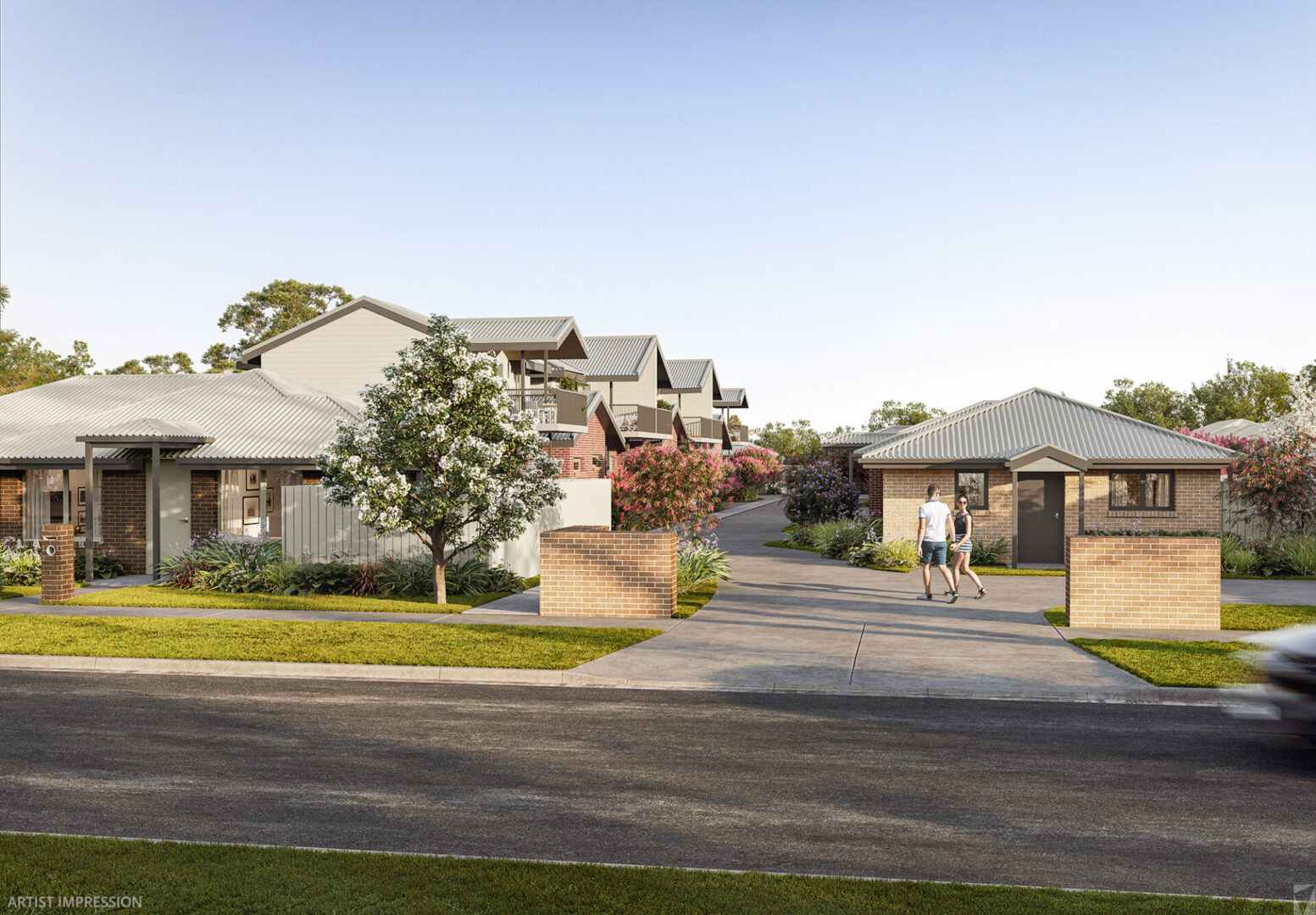
Answering: Can you still develop townhouses or apartments on a Melbourne heritage-overlay site, and how does the overlay affect yield?
Estimated reading time: 9 min read
Yes, you can develop townhouses or apartments on a heritage-overlay site in Melbourne. A heritage overlay doesn’t kill a development — it changes the maths, and the maths can still work. The overlay (Clause 43.01) means demolition, new buildings and works trigger a council planning permit, and the existing fabric is assessed for significance before a replacement is approved. That removes the simplest play, full demolition and a maximised box, but it rarely removes the yield. A retain-and-build or adaptive-reuse scheme, designed to the constraint from the feasibility stage, can deliver multiple dwellings while keeping the council on side. Across more than 400 projects in Victoria, including multi-residential and adaptive-reuse work, our role is to find the developable scheme inside the overlay rather than treating the overlay as a wall.
You are holding a site, or about to buy one, and the heritage overlay on the title is making the spreadsheet flash red. The fear is real and specific: that you have paid for development land you cannot develop, that months of holding cost will end in a refusal, or that whatever you do build will be so compromised by retention it never pays its way.
That fear is usually answering the wrong question. The overlay does not ask “can you build?” It asks “what can you build, and how does it sit with what is already here?” Get that resolved before you spend on a full design, and the difference between a stalled site and a profitable one is feasibility, not luck. Here is how the numbers actually move.
Key Insights
- A heritage overlay triggers a planning permit for demolition, new buildings and works under Clause 43.01, but it does not prohibit multi-dwelling development.
- The yield play is usually retain-and-build or adaptive reuse: keep the significant fabric, place the new dwellings where they don’t compromise it.
- Demolition of a heritage place will not normally be approved until a replacement building is approved, so the new scheme and the demolition case are designed together.
- The 2025 Townhouse and Low-Rise Code (VC267, Clause 55) speeds up many small developments, but its deemed-to-comply, no-appeal benefit is limited on overlay sites where the heritage permit and objector rights still apply.
| Factor | How it constrains | How it can still work for yield |
|---|---|---|
| Heritage overlay (Clause 43.01) | Triggers a planning permit for demolition, buildings and works; significance is assessed | Retention becomes a design feature, not a dead loss; well-argued schemes are read more favourably |
| Demolition limits | Full demolition of a significant place is rarely supported and not approved before a replacement is | Retain the principal facade/form, develop behind and above; design demolition and replacement as one case |
| Retain-and-build | New dwellings must defer to the heritage form in scale, siting and materials | Rear and upper-level dwellings, sensitive interface, can deliver real density on a constrained footprint |
| Interface / amenity | Overlooking, overshadowing and neighbourhood character shape the envelope | Designing the envelope to these from day one avoids the redesigns that erode margin |
| VC267 / Clause 55 | Deemed-to-comply, no-appeal fast track does not remove the heritage permit or its objector rights | Code efficiencies still help the dwellings themselves; the heritage case is run alongside, not instead |
| Feasibility | Holding costs and refusal risk punish sites taken to design before the overlay is tested | A feasibility-first read sizes the real envelope before spend, so the numbers rest on an achievable scheme |
Keep reading for full details below.
Table of Contents
- What the Overlay Actually Restricts, and What It Doesn’t
- The Retain-and-Build Play: Where the Yield Lives
- VC267 and Clause 55 on an Overlay Site
- What Unlocks Yield: The Feasibility-First Read
What the Overlay Actually Restricts, and What It Doesn’t
A heritage overlay restricts how you change a place; it does not, on its own, ban higher-density development.
When a property is included in the Heritage Overlay (Clause 43.01) of the planning scheme, you generally need a planning permit from your council before demolition, external alterations or new construction. The council assesses whether the works will adversely affect the significance of the heritage place. Two points from the provisions matter most to a developer’s numbers. First, demolition of a heritage place, or part of one, will not normally be approved until a replacement building or development is approved, so you cannot clear the site and decide later. Second, where a developer seeks demolition on the basis of building condition, a structural report from a suitably qualified person is expected, assessing whether defects can be repaired rather than assumed beyond saving.
None of that is a prohibition on townhouses or apartments. The overlay constrains the form of the development, principally the treatment of the existing significant fabric and the way new building reads in the streetscape, not the existence of it. A contributory building in a precinct is assessed for how your changes read against the character of that precinct, which often leaves real scope at the rear and to the upper levels. An individually significant place is protected more tightly in its own right, so the principal elevations and original fabric carry through, and the new dwellings sit behind or above. The constraint is specific, and a specific constraint can be designed to.
The Retain-and-Build Play: Where the Yield Lives
On most overlay sites, the developable yield lives in a retain-and-build or adaptive-reuse scheme rather than in clearing the site.
The pattern is consistent. You keep the significant fabric, typically the principal facade, the original form, sometimes a whole heritage structure, and you place the new dwellings where they defer to it: to the rear, above, or set back so the heritage form still reads from the street. Done well, the retained building stops being a cost line and becomes the project’s character and its planning argument at once. Councils and their heritage advisors read a considered retention scheme far more favourably than a maximised box that erases the place, and a permit that lands cleanly is worth more to a developer’s programme than a slightly larger scheme that is refused or dragged to the Tribunal.
Adaptive reuse is the sharper version of this. A church, a warehouse or a substantial period building can convert to multiple dwellings, the heritage form intact, the interior and any new wings doing the density. Our practice has delivered this kind of work, including a Fairfield church converted to eight residential dwellings, where the significant building carries the project rather than blocking it. The same logic scales down to a contributory Victorian on a development site: retain the front rooms and facade, build the new townhouses behind.
What unlocks yield on a heritage-overlay site
- Retention as feature, not loss — design the significant fabric into the offer so it earns its keep commercially and in the permit.
- Density behind and above — place new dwellings to the rear and upper levels where they defer to the heritage form.
- One integrated case — resolve demolition extent, replacement design and interface together, because the council assesses them together.
- Envelope to the constraints early — set overlooking, overshadowing and character into the massing before, not after, the feasibility is signed off.
- Feasibility before full design — size the real, approvable scheme before committing the design and holding-cost spend.
VC267 and Clause 55 on an Overlay Site
The 2025 Townhouse and Low-Rise Code is a genuine help for small developments, but its biggest benefit is limited on a heritage-overlay site.
Amendment VC267 restructured Clause 55, the standards for developments of two or more dwellings up to and including three storeys, into a Townhouse and Low-Rise Code with a deemed-to-comply pathway. The deemed-to-comply standards commenced on 31 March 2025. Where an application meets them, there is no right of appeal for objectors, which is the change developers have welcomed: a faster, more certain permit. The Code also eased several standards, reducing the minimum street setback from 9 metres to 6 metres and lifting overlooking provisions on bedroom windows, among others.
Here is the part that matters on your site. If a proposal also needs a permit under another provision, such as a Heritage Overlay, the objector appeal rights for that provision still apply. A heritage overlay triggers its own separate permit and assessment, with its own advertising and third-party VCAT rights, running alongside Clause 55. So the Code’s no-appeal certainty does not extend to the heritage decision. That is not a reason to ignore VC267, the eased dwelling standards still help the townhouses or apartments themselves, but it does mean the heritage case is the one that governs your risk and your timeline. Building a feasibility on the Code’s fast track while overlooking the overlay running beside it is exactly how a developer mis-prices a site.
What Unlocks Yield: The Feasibility-First Read
What turns a heritage-overlay site from a worry into a development is a feasibility-first read that sizes the approvable scheme before money goes into design.
The error we see most often is a site bought on a yield assumed from the zoning alone, then taken straight to a full design that the overlay later forces to be redrawn, or refused. By then the holding costs are running and the margin is eroding. The discipline that avoids it is to reconcile the heritage significance, the council’s likely position and the site’s structural realities with the development form first, so the numbers in your feasibility rest on a scheme that can actually be approved.
That is the work we do before the first line is drawn: read the significance correctly, test how much retention the place truly demands, find where the new dwellings can go, and map the interface and amenity constraints onto the envelope. It is the same protocol behind more than 200 permit applications and 400-plus projects across Victoria, applied here to the developer’s question rather than the homeowner’s, what is the most this site will yield within the overlay, and what will the council support. Get that answer early, and you are pricing a real scheme. For developers, that honest envelope is the difference between a site that stalls and one that builds.
Closing
A heritage overlay reshapes a development; it rarely ends one. The permit triggers under Clause 43.01, the limits on demolition, the retain-and-build logic and the way VC267 sits beside the heritage permit all point to the same conclusion: yield on an overlay site is a feasibility question answered through design, not a verdict handed down by the overlay. To see how we test that before you commit, visit our development page.
Frequently Asked Questions
Q: Can you build townhouses or apartments on a heritage-overlay site in Melbourne?
A: Yes. A heritage overlay does not prohibit multi-dwelling development; it requires a planning permit for demolition, new buildings and works under Clause 43.01, and the council assesses how the proposal affects the heritage significance. Most viable schemes retain the significant fabric and place the new dwellings to the rear or above. The overlay constrains the form of the development, not its existence.
Q: Does a heritage overlay mean I can’t demolish the existing building?
A: Not necessarily, but full demolition of a significant place is rarely supported, and demolition will not normally be approved until a replacement building or development is approved. Where demolition is sought on building condition, a structural report from a suitably qualified person is expected. The practical approach is to design the retention, demolition extent and replacement as one integrated case rather than clearing the site first.
Q: Does the 2025 Townhouse and Low-Rise Code (VC267) help on a heritage site?
A: Partly. The Code’s eased Clause 55 standards still apply to the dwellings, but its deemed-to-comply, no-objector-appeal benefit does not remove the heritage permit. Where a Heritage Overlay also applies, that overlay’s separate permit, advertising and third-party VCAT appeal rights still apply alongside Clause 55, so the heritage decision governs your timeline and risk.
Q: How do I work out the real yield before I commit to a heritage-overlay site?
A: With a feasibility-first read that sizes the approvable scheme before design spend. That means reading the significance correctly, testing how much retention the place demands, locating where new dwellings can go, and mapping interface and amenity onto the envelope. We run this work before the first line is drawn so your numbers rest on a scheme the council can support, not a yield assumed from the zoning alone.
Want to Learn More?
With more than 35 years across Melbourne’s heritage suburbs, and a record in multi-residential and adaptive-reuse work, BY Projects Architecture treats the overlay as part of the development equation, not a hurdle bolted on at the end. The earlier the constraints are tested, the truer the feasibility.
Citations
- “PPN95: Local heritage protection provisions” — Planning Victoria. Confirms a place of local heritage significance is protected through the Heritage Overlay (Clause 43.01), that demolition, alterations and new construction generally require a council planning permit, and that demolition is not normally approved until a replacement building is approved. https://www.planning.vic.gov.au/guides-and-resources/guides/planning-practice-notes/local-heritage-protection-provisions
- “Local heritage protection” — Planning Victoria. Confirms how the Heritage Overlay (Clause 43.01) operates in the planning scheme, the permit triggers for buildings and works, and the assessment of significance. https://www.planning.vic.gov.au/guides-and-resources/guides/all-guides/local-heritage-protection
- “Townhouse and Low-Rise Code” — Planning Victoria. Sets out the VC267 Clause 55 Code for developments of two or more dwellings up to three storeys, the deemed-to-comply pathway and removal of objector appeal rights, and that where another provision such as a Heritage Overlay applies, that provision’s objector appeal rights still apply. https://www.planning.vic.gov.au/guides-and-resources/guides/all-guides/residential-development/townhouse-and-low-rise-code
- “Amendment VC267 – New Low-Rise Code (Clause 55)” — Ratio. Confirms the Code applies to multi-dwelling developments of three storeys or less, the deemed-to-comply standards commenced 31 March 2025, the no-appeal benefit for compliant applications, and the eased setback and overlooking standards. https://ratio.com.au/amendment-vc267-new-low-rise-code-clause-55/
These are the Victorian sources that govern development on a heritage-overlay site: the Heritage Overlay (Clause 43.01) and PPN95 for heritage permits and demolition, and the VC267 Townhouse and Low-Rise Code (Clause 55) for multi-dwelling development standards and how they interact with an overlay.
With 35-plus years and a record across multi-residential and adaptive-reuse work in Victoria, our role on a heritage-overlay site is to find the developable scheme inside the constraint, so your feasibility rests on a home, or a set of homes, built for living, not just a yield assumed from the zoning.
91%
Quality Verified
This content scored 91% in the Probably Genius Publication Readiness Assessment, meeting standards for direct answers, section depth, proof points, citation quality, and AI extractability.