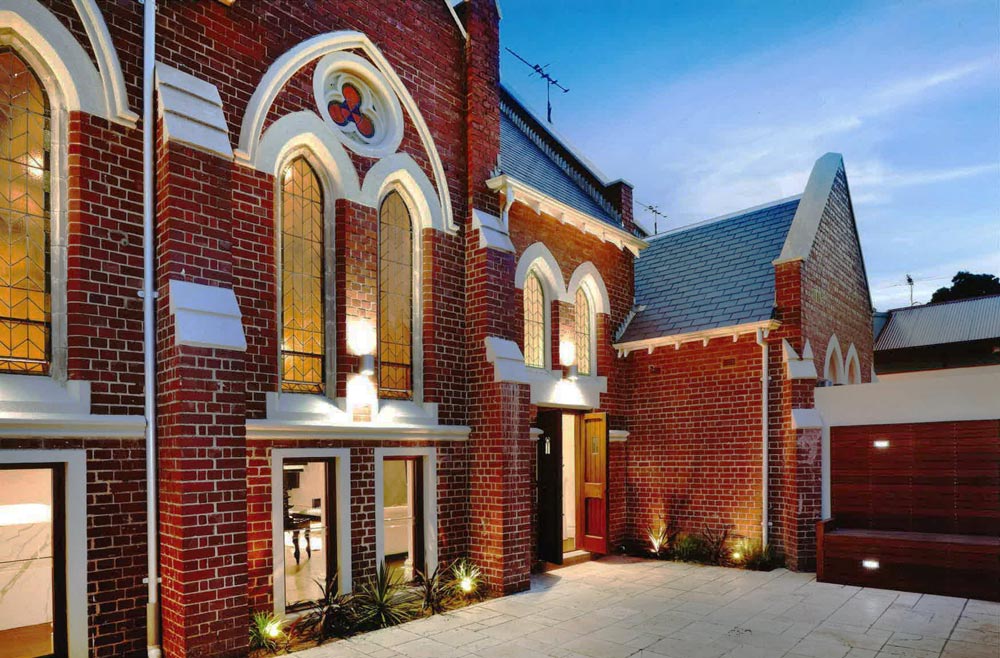
Answering: How do you conserve original heritage fabric in a Melbourne period home — lime mortar, slate, leadlight and tessellated tiles — without destroying it?
Estimated reading time: 9 min read
Conserving original heritage fabric means repairing what is there with materials and methods that match how the building was made, rather than replacing it with modern equivalents that look similar but behave differently. In practice that means repointing in soft lime mortar, not cement; repairing and reusing slate or terracotta rather than stripping the roof; re-leading original leadlight rather than fitting new double glazing; and lifting and reinstating tessellated tiles, not tiling over them. Get the mortar wrong and you can damage a wall that has stood for a century — heritage is in the details, literally. The Australia ICOMOS Burra Charter, the national standard for conservation, puts it plainly: change as much as necessary, but as little as possible.
If you own a significant period home, the fear is specific and reasonable: that a well-meaning builder will “modernise” the very things that made you buy it. A cement render skim, a re-roof in machine-made tiles, a leadlight swapped for a sealed unit — each reads as an upgrade and each quietly erases the original fabric, and its value, for good.
The difficult truth is that much heritage damage is done by people trying to help. Cement is stronger than the brick around it; modern glass is more efficient than old leadlight; new tiles are flatter than worn encaustics. Stronger, more efficient and flatter are exactly the wrong instincts when the goal is to keep what is original intact.
This is where building science earns its place over guesswork. Below is how the five elements that matter most should actually be conserved, and the common mistake that damages each.
Key Insights
- Soft heritage brick was built with lime mortar; repointing it in hard cement traps moisture and can spall the brick face — the mortar should always be the sacrificial, softer layer.
- Slate and terracotta roofs are repaired and selectively re-laid, not stripped — original tiles are retained and reused wherever they can be, with reclaimed matches for the rest.
- Original leadlight is re-leaded and conserved, not replaced; the Burra Charter principle is minimum intervention and retaining significant fabric.
- Tessellated and encaustic tiles are lifted, cleaned and reinstated to the original pattern — never tiled over or replaced wholesale with modern lookalikes.
| Original element | Why it matters | Conserve / repair approach | Common mistake |
|---|---|---|---|
| Lime mortar & brickwork | Soft, breathable mortar lets a solid wall manage moisture and movement | Repoint in matching lime mortar; rake out by hand; let the mortar be the sacrificial layer | Repointing in hard cement, which traps damp and spalls the brick face |
| Slate & terracotta roofing | Original tiles carry the roof’s character, proportion and patina | Repair and selectively re-lay; retain and reuse sound tiles; match reclaimed slate or terracotta for the rest | Stripping the whole roof and re-covering in modern machine-made tiles |
| Leadlight & stained glass | Original glass and came are significant, often handmade, fabric | Re-lead and conserve in situ where possible; clean and stabilise; copy only where glass is lost | Replacing leadlight with a sealed double-glazed unit for efficiency |
| Tessellated & encaustic tiles | Verandah and hallway patterns are a defining period feature | Lift, clean and reinstate to the original pattern; source matching tiles for gaps | Tiling over them, or replacing with modern lookalikes that flatten the pattern |
| Original render & detailing | Soft lime render and mouldings define the facade’s reading | Patch like-for-like in lime; conserve cornices, brackets and parapets | Skimming over in acrylic or cement render that cracks and seals the wall |
Keep reading for full details below.
Table of Contents
- Lime Mortar and Brickwork: Why Cement Is the Quiet Killer
- Slate and Terracotta Roofs: Repaired, Not Replaced
- Leadlight and Stained Glass: Re-leading Original Fabric
- Tessellated Tiles and Original Render: Reinstatement Done Right
Lime Mortar and Brickwork: Why Cement Is the Quiet Killer
The single most common way to damage a period home is to repoint it in the wrong mortar, and it happens because cement feels like the responsible choice.
Lime was the main binder in mortars and renders for Australia’s early buildings, used in home construction right up to the mid-twentieth century, after which cement became the default. The reason that distinction matters is physical. A solid masonry wall has no cavity and no plastic membrane; it manages water by letting it move into the soft lime joints and evaporate out again. The mortar is meant to be the softer, sacrificial layer — it weathers so the brick does not. As Heritage Council Victoria’s guidance on repointing older buildings sets out, lime mortars are the appropriate material for these structures, and modern mortars can cause damage.
Cement reverses the relationship. It is harder and less permeable than the brick around it, so moisture that once escaped through the joints is driven instead through the face of the brick. Over a few seasons of wetting, salts and frost, that brick face blows — it spalls — while the cement pointing sits there intact. You have made the joint stronger than the brick, and the brick pays for it. The same logic applies to render: a rigid cement or acrylic skim over soft lime walls cracks, then seals moisture behind it.
Doing it properly means raking out failed joints by hand rather than with an angle grinder that bites into the bricks, then repointing with a lime mortar matched to the original in strength, colour and joint profile. This is the kind of decision where Barbara’s grounding in building science — about a decade lecturing the subject at RMIT and the University of Melbourne — shapes the specification: the wall is read as a moisture system first, an aesthetic second.
Slate and Terracotta Roofs: Repaired, Not Replaced
A heritage roof is rarely as far gone as a re-roofing quote suggests, and the conservation answer is almost always repair before replacement.
Original slate and terracotta carry a roof’s character: the size and gauge of the slates, the number of courses, the ridge and valley detailing, the patina that machine-made tiles cannot fake. Heritage Victoria’s guidance on slating, tiling and roof plumbing stresses retaining these original characteristics — slate sizes, the lap and the method of laying — rather than substituting a uniform modern product. Stripping a sound slate roof to re-cover it in concrete tiles is one of the most visible and irreversible ways to diminish a period home.
The right sequence is methodical:
- Assess the roof in detail — many slates that look failed are simply held by corroded fixings (“nail sickness”) rather than broken.
- Retain and reuse every sound original tile; sound slates are carefully set aside and re-laid.
- Match the shortfall with reclaimed or closely matched slate or terracotta — colour, texture and thickness — so repairs read as continuous.
- Renew the failure points beneath: battens, flashings and fixings, which are usually the real problem.
Done this way, a roof keeps its original material and proportion while becoming genuinely watertight again. Across more than 400 projects, our practice approaches the roof as something to conserve and make sound, not a surface to swap out for convenience.
Leadlight and Stained Glass: Re-leading Original Fabric
Original leadlight is significant fabric in its own right, and the conservation instinct is to keep the glass and renew what holds it, not the other way around.
Over a century, the lead came that frames the glass fatigues and sags, panels bow, and joints fail — but the glass itself, often handmade and irreplaceable, is usually sound. The conservation response is re-leading: the panel is documented, carefully dismantled, the original glass cleaned and retained, and new came fitted to the recorded pattern. This follows the Burra Charter’s core principle of minimum intervention — retaining significant fabric and changing as little as possible — with new material introduced only where original glass is genuinely lost, and then copied faithfully.
The temptation to “modernise” is strongest here, because a single-glazed leadlight is, on paper, a thermal weak point. But replacing it with a sealed double-glazed unit trades irreplaceable fabric for a marginal efficiency gain, and once the original is gone it cannot be recovered. There are gentler ways to improve comfort — discreet secondary glazing behind a conserved panel, draught sealing, and the broader fabric upgrades covered on our heritage extensions work — that lift performance without sacrificing the leadlight. This is the mixed-mode thinking building science encourages: improve comfort by adapting the building, not by stripping out what makes it significant.
Tessellated Tiles and Original Render: Reinstatement Done Right
Tessellated and encaustic tiling is a defining feature of Victorian and Federation homes, and the worst thing you can do to it is hide it.
A verandah or hallway floor of tessellated tiles is a geometric pattern of individually laid pieces, often with encaustic borders and step treads. The colours and patterns shifted by era — vivid, complex multi-colour work through the Victorian period, earthier single-colour encaustics in the Federation years — which is why a faithful repair has to match the original palette and layout, not a generic modern set. Tiling over an original floor, or ripping it out for a flat contemporary lookalike, removes a feature that is difficult and costly to ever bring back.
Reinstatement done properly means assessing the floor, carefully lifting damaged or lifted sections, cleaning the sound tiles, repairing the bedding, and re-laying to the recorded pattern, sourcing matching tiles only for the gaps. Original render and detailing follow the same discipline: cornices, brackets, parapets and lime render are patched like-for-like rather than skimmed over. A heritage application is also far stronger when it can show this kind of retention — our 59 heritage approvals across more than ten Victorian councils have consistently rested on a clear commitment to conserving original fabric, which is exactly what a heritage advisor wants to see.
Closing
Conserving heritage fabric is not nostalgia — it is technical care applied in the right direction. Lime stays soft so the brick survives; the roof is repaired before it is replaced; the leadlight is re-leaded rather than swapped out; the tiles are reinstated, not buried. The through-line, in the words of the Burra Charter, is to change as much as necessary but as little as possible. To see how we approach the fabric of a period home from the first conversation, visit our process page.
Frequently Asked Questions
Q: Why is cement mortar a problem on an old brick house?
A: Older Melbourne homes were built with soft, breathable lime mortar that lets a solid wall manage moisture, with the mortar weathering as the sacrificial layer so the brick does not. Cement is harder and less permeable than the brick, so moisture is forced out through the brick face instead of the joints, and over a few seasons the brick face spalls. Repointing should always match the original in a lime mortar, raked out by hand, never in cement.
Q: Do I have to replace a heritage slate or terracotta roof?
A: Usually not. Many roofs that look failed are suffering from corroded fixings or worn flashings rather than failed tiles. The conservation approach is to assess carefully, retain and reuse every sound original tile, match the shortfall with reclaimed or closely matched slate or terracotta, and renew the battens, flashings and fixings beneath. That keeps the roof’s original material and proportion while making it watertight again.
Q: Can original leadlight be kept and still be more comfortable?
A: Yes. Original leadlight is significant fabric and is best re-leaded — the glass retained, the failing lead came renewed to the recorded pattern — rather than replaced with a sealed double-glazed unit. Comfort can be improved through discreet secondary glazing behind the conserved panel and draught sealing, which lifts performance without sacrificing irreplaceable glass. It follows the Burra Charter principle of minimum intervention.
Q: What is the first step before conserving heritage fabric?
A: Understand what is original and significant before anything is touched. A considered assessment of the mortar, roof, glass, tiling and render establishes what should be retained, what can be repaired, and where matched replacement is genuinely needed. We begin every heritage project with that honest read of the existing fabric, so the work conserves the home rather than quietly modernising it away.
Want to Learn More?
With more than 35 years working within Melbourne’s heritage suburbs, BY Projects Architecture treats original fabric as something to read, repair and conserve — built for living, not just photos. The more carefully the detail is understood at the start, the more of the home survives the work.
Citations
- “Repointing mortar joints in older buildings” — Heritage Council Victoria. Confirms lime was the main binder for Australia’s early buildings, that lime mortars are the appropriate material for older structures, and that modern (cement) mortars can damage them. https://heritagecouncil.vic.gov.au/research-guidance/manage-and-maintain-heritage/repointing-mortar-joints-in-older-buildings
- “Slating, tiling and roof plumbing” — Heritage Victoria. Sets out retaining original roofing characteristics — slate sizes, courses, lap and method of laying — and repairing and reusing original tiles rather than wholesale replacement. https://www.heritage.vic.gov.au/__data/assets/pdf_file/0027/505269/Slating-tiling-and-roof-plumbing.pdf
- “The Burra Charter, 2013” — Australia ICOMOS. The national conservation standard establishing minimum intervention, respect for existing fabric, and the principle of changing as much as necessary but as little as possible. https://australia.icomos.org/publications/burra-charter-practice-notes/
- “Stained Leadlight Glass: Conservation Principles” — Heritage Tasmania. An Australian heritage-authority guide confirming the conservation of original leadlight by retaining significant glass and re-leading, with replacement only where original fabric is lost. https://heritage.tas.gov.au/Documents/Stained%20Leadlight%20Glass%20-%20Conservation%20Principles.pdf
These are the conservation authorities that govern original heritage fabric: Heritage Victoria and Heritage Council Victoria for masonry and roofing, the Australia ICOMOS Burra Charter for conservation principles, and an Australian heritage guide for leadlight glass.
With 35-plus years and 59 heritage approvals across Melbourne’s councils, our work is to conserve the original fabric of a period home with genuine technical care — so the detail that makes your home significant survives the renovation, built for living, not just photos.
92%
Quality Verified
This content scored 92% in the Probably Genius Publication Readiness Assessment, meeting standards for direct answers, section depth, proof points, citation quality, and AI extractability.