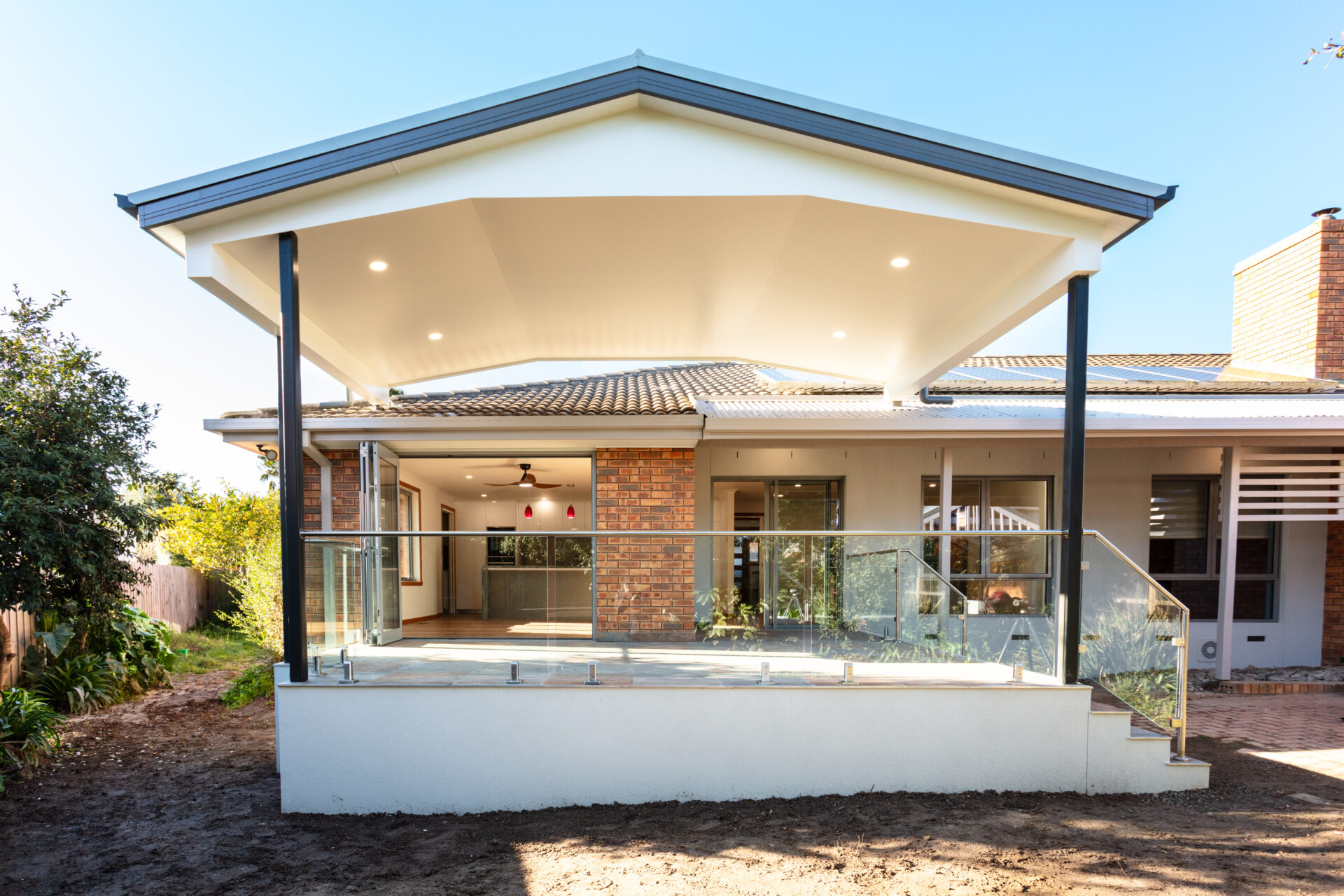
Answering: Should I renovate my family home or downsize to something smaller in Melbourne’s east?
Estimated reading time: 10 min read
The answer depends on your specific numbers, but here’s what most people miss: staying put often costs more than moving when you factor in annual maintenance of $15,000 to $20,000, energy bills averaging $4,500, and the opportunity cost of equity sitting idle in a home you’re barely using. The decision comes down to a ten-year financial comparison that weighs renovation costs against holding costs, stamp duty, and lifestyle factors unique to your situation in Boroondara or Stonnington. Based on BY Projects Architecture’s 35 years designing for Melbourne families through every life stage, and more than 400 projects including countless “should we stay or go” conversations, the financial equation often favours downsizing by $400,000 or more over a decade, though heritage overlays and subdivision potential can flip that calculation entirely for properties in Hawthorn and Camberwell.
You’re likely rattling around in rooms you haven’t used since the kids left, wondering whether those renovation quotes are worth it or whether that Hawthorn apartment makes more sense. The emotional weight of this decision is real. Your home holds decades of memories, and the thought of leaving your established networks, familiar cafes, and community connections feels significant.
The reality is that success depends on honest assessment of your property’s condition, your health trajectory over the next decade, and whether your equity is working for you or simply sitting there. A mortgage-free four-bedroom Camberwell home worth $1.5 million sounds comfortable until you realise that same capital could generate $75,000 annual income invested elsewhere.
Melbourne’s eastern suburbs offer distinct advantages for both paths. Hawthorn and Camberwell now have quality downsizer apartments near trams and services, while heritage properties in these areas can access grants worth up to $50,000. This guide walks through when each option makes sense.
Key Insights
- Renovation costs have jumped 30 per cent since 2020, but that’s only part of the equation.
- Council rates and insurance in Boroondara have increased 25 per cent over five years, while modern apartments cost roughly $2,700 less annually to heat and cool.
Keep reading for full details below.
Table of Contents
- The Real Calculation Most People Get Wrong
- When Staying Makes Financial Sense
- When Moving Is The Smarter Play
- Your Decision Framework
- Frequently Asked Questions
- Want to Learn More?
- Citations
The Real Calculation Most People Get Wrong
Most downsizing versus renovating Melbourne decisions focus on the wrong numbers. People compare renovation quotes against apartment purchase prices without accounting for the true cost of staying. Annual maintenance on a four-bedroom Camberwell home runs between $15,000 and $20,000 yearly, a figure that catches many empty nesters off guard when we raise it during initial consultations.
Your trapped equity represents a significant opportunity cost that rarely appears in simple stay-versus-move comparisons. A home worth $1.5 million with no mortgage means $1.5 million earning nothing while property values in established suburbs plateau. That same capital invested conservatively could generate substantial retirement income, fundamentally changing your financial flexibility.
Energy costs create another gap in typical calculations. Heating and cooling a large period home averages $4,500 annually in Melbourne’s eastern suburbs. Modern apartments with proper insulation, now common in Hawthorn and Camberwell developments, run closer to $1,800. Over a decade, that difference alone exceeds $25,000.
BY Projects Architecture has tracked these cost trends across Stonnington and Boroondara suburbs for 35 years. We’ve watched council rates and insurance outpace apartment holding costs consistently, compounding the financial pressure for empty nesters who delay the decision.
- Calculate your true annual holding costs including maintenance, utilities, rates, and insurance across a ten-year horizon
- Get a realistic property valuation and confirm whether your property sits under heritage overlay or dual-occupancy zoning
- Compare renovation quotes against decade-long holding costs, not just upfront expenses
When Staying Makes Financial Sense
The downsizing versus renovating Melbourne equation shifts dramatically if your property has hidden value. Many Boroondara and Stonnington homes sit on subdividable land under current planning scheme rules, offering potential for dual occupancy or selling off the back block. We’ve completed subdivision-enabling renovations that freed up $300,000 to $600,000 in additional equity without requiring a move.
Heritage overlay properties in Hawthorn and Camberwell can access restoration grants and tax incentives worth up to $50,000. This advantage is specific to Melbourne’s eastern suburbs and often missed in generic online calculators. If heritage character matters to you, targeted renovation becomes financially viable in ways that surprise many clients.
Mortgage-free homeowners with manageable maintenance often find that renovating specific areas costs less than the transaction costs of moving. Stamp duty on a $1.2 million townhouse runs approximately $65,000. Add moving costs of $15,000 to $20,000 and agent fees, and you’ve spent close to $100,000 before settling into your new place.
BY Projects Architecture specialises in creating self-contained granny flats and dual-living spaces within existing footprints. For families where multigenerational living appeals, or where adult children may return, smart renovation design preserves options that selling eliminates.
- Check your property’s zoning and overlay status through Boroondara Council’s planning portal
- Get subdivision feasibility advice before deciding, as this may reveal $400,000 or more in locked equity
- Calculate stamp duty and moving costs against targeted renovation options
When Moving Is The Smarter Play
Mounting maintenance issues often tip the downsizing versus renovating Melbourne decision toward selling. New roof, restumping, and replumbing on a period home can hit $150,000, and our heritage experience across 59 projects shows that aging properties in Camberwell and Hawthorn often have cascading repair needs. One fix reveals another, and budgets spiral.
Using less than half your home regularly while heating and maintaining unused rooms is a pattern we identify frequently during consultations. Moving to a two or three-bedroom Hawthorn apartment designed for downsizers often frees up $500,000 to $800,000 in equity. That capital can fund travel, healthcare, or aged care planning rather than sitting in walls you never touch.
Hawthorn and Camberwell apartment developments now offer three-bedroom options with studies, matching downsizer needs better than cramped investor stock. Locations near tram lines, cafes, and established services in suburbs like Hawthorn East make apartment living genuinely appealing for active empty nesters who’d rather spend weekends at cafes than weeding.
Garden maintenance alone can run $8,000 annually. When you quantify that time and money, then map it against the travel or leisure spending you’d prioritise, the lifestyle dividend of moving often becomes the deciding factor.
- Visit new developments specifically designed for downsizers with lift access and communal gardens
- Calculate the lifestyle dividend of less maintenance against emotional attachment
- Consider renting for six months in a Hawthorn or Camberwell apartment to test the transition
Your Decision Framework
Health and mobility planning should anchor your decision. Will stairs become problematic in five years? Can renovation adequately address accessibility with a ground-floor bedroom, walk-in shower, and accessible entry, or does an apartment better suit your aging-in-place vision? Both paths can work, but honest assessment now prevents costly changes later.
Social connection deserves explicit weight beyond financial comparison. Staying near established networks in Boroondara, your Rotary club, community groups, and familiar cafes, matters differently than moving closer to family in outer suburbs. Neither choice is wrong, but clarity on your priorities prevents regret.
Financial flexibility needs vary by individual. Liquid assets for travel and healthcare versus property-tied wealth create entirely different lifestyle scenarios. Some clients thrive with the security of owning outright. Others feel constrained by wealth they cannot access.
Emotional readiness is personal. Some people embrace change at 65. Others need familiar surroundings at 75. Forcing either decision, staying reluctantly or moving before you’re ready, often leads to regret within three to five years.
The architecture profession exists partly to help families navigate exactly these transitions. With 35 years guiding Melbourne homeowners through life-stage changes and more than 400 completed projects, we’ve seen which decisions age well and which become expensive regrets. Whether renovation makes sense or downsizing fits better, getting the numbers right matters, and so does getting the life right.
For a deeper look, visit https://byarchitecture.com.au/claim-your-free-consultation/
Frequently Asked Questions
Q: What’s the average cost difference between renovating and downsizing in Melbourne’s eastern suburbs?
A: Renovating a 4-bedroom Camberwell or Hawthorn home for aging in place typically costs $350,000–500,000, while downsizing to a quality 2–3-bedroom apartment costs $1.2–1.5 million but frees up $500,000–800,000 in equity. Factor in stamp duty (~$65,000), moving costs ($15,000–20,000), and elimination of $20,000 annual maintenance—the financial equation often favours downsizing by $400,000+ over a decade. However, if your property has subdividable land or heritage grant potential, staying put may unlock equity without moving. BY Projects advises calculating your specific holding costs (rates, utilities, maintenance cycles) and testing both scenarios over 10 years; emotional factors—family proximity, community roots, aging-in-place preference—often tip the decision beyond pure numbers.
Q: Should I get professional architectural or financial advice before deciding?
A: Absolutely. Most people underestimate holding costs or overlook planning opportunities (like dual occupancy zoning) that could change the entire equation. We’ve guided 400+ Melbourne families through this decision and found that independent advice from both a renovation architect and a buyer’s advocate prevents confirmation bias and surfaces options you might miss alone. A consultation costs far less than making the wrong choice and living with regret for three to five years.
Q: How long does it take to get clarity on whether to renovate or downsize?
A: A thorough assessment typically takes 4–6 weeks: initial consultation (1–2 weeks), property valuation and zoning research (2–3 weeks), and detailed cost comparisons across both scenarios (1 week). We recommend running the numbers annually as circumstances change—rates increase, maintenance needs emerge, and family situations evolve. The goal isn’t a one-time decision but an adaptive framework you revisit with confidence.
Q: What’s the first step if I’m genuinely uncertain about staying or moving?
A: Start by calculating your true annual holding costs (maintenance, utilities, rates, insurance) and writing down your non-negotiables for the next decade (location, space, health needs, family proximity). Then book consultations with both a renovation architect (like BY Projects) and a buyer’s advocate to test both scenarios against your actual situation. This balanced perspective prevents you from rationalising a decision based on emotion alone and grounds your choice in real numbers and real life priorities.
Want to Learn More?
We’ve drawn on 35 years of experience and deep industry expertise to create this comprehensive guide for Melbourne homeowners navigating one of life’s biggest decisions. Our work across 400+ residential projects—including 59 heritage restorations and 235+ social housing dwellings—has taught us that there’s no one-size-fits-all answer, only the right answer for your life.
If you’d like to learn more, visit https://byarchitecture.com.au/claim-your-free-consultation/ to explore how we approach the renovate-or-downsize decision with your specific situation in mind.
Whether you’re leaning toward renovation or considering a move, the stakes are high enough to deserve professional guidance. Over 35 years helping Melbourne families through life-stage transitions, we’ve learned that the families who sleep well at night aren’t those who made the “perfect” financial choice—they’re those who made an informed choice aligned with their values, health needs, and the life they actually want to live. Your next home chapter deserves that clarity. Let’s run the real numbers together and make sure your decision fits your life, not just your budget.
Citations
- “Boroondara Planning Scheme” — Confirms zoning rules, heritage overlays, dual occupancy potential, and neighbourhood character overlays that directly affect the financial and practical viability of staying versus moving in Boroondara and Stonnington suburbs. https://www.boroondara.vic.gov.au/services/planning-and-building/planning/planning-scheme-and-amendments/boroondara-planning-scheme
- “Victorian Government Changes to Planning” — Details recent amendments enabling dual occupancy and subdivision-friendly development in inner Melbourne east, opening new equity-unlocking options for families considering whether to renovate or downsize. https://www.boroondara.vic.gov.au/services/planning-and-building/planning/planning-scheme-and-amendments/victorian-government-planning-initiatives/victorian-government-changes-planning
- “Boroondara Policies, Plans and Strategies” — Outlines council rates, sustainability targets, and neighbourhood character expectations that influence long-term holding costs and renovation feasibility for properties across Hawthorn, Camberwell, and surrounding suburbs. https://www.boroondara.vic.gov.au/your-council/policies-plans-and-strategies
Planning overlays and ResCode standards for dual occupancy developments remain central to understanding whether your property can unlock additional value through subdivision or multigenerational design—a factor that often tips the financial equation toward staying put.
84%
Quality Verified
This content scored 84% in the Probably Genius Publication Readiness Assessment, meeting standards for direct answers, section depth, proof points, citation quality, and AI extractability.