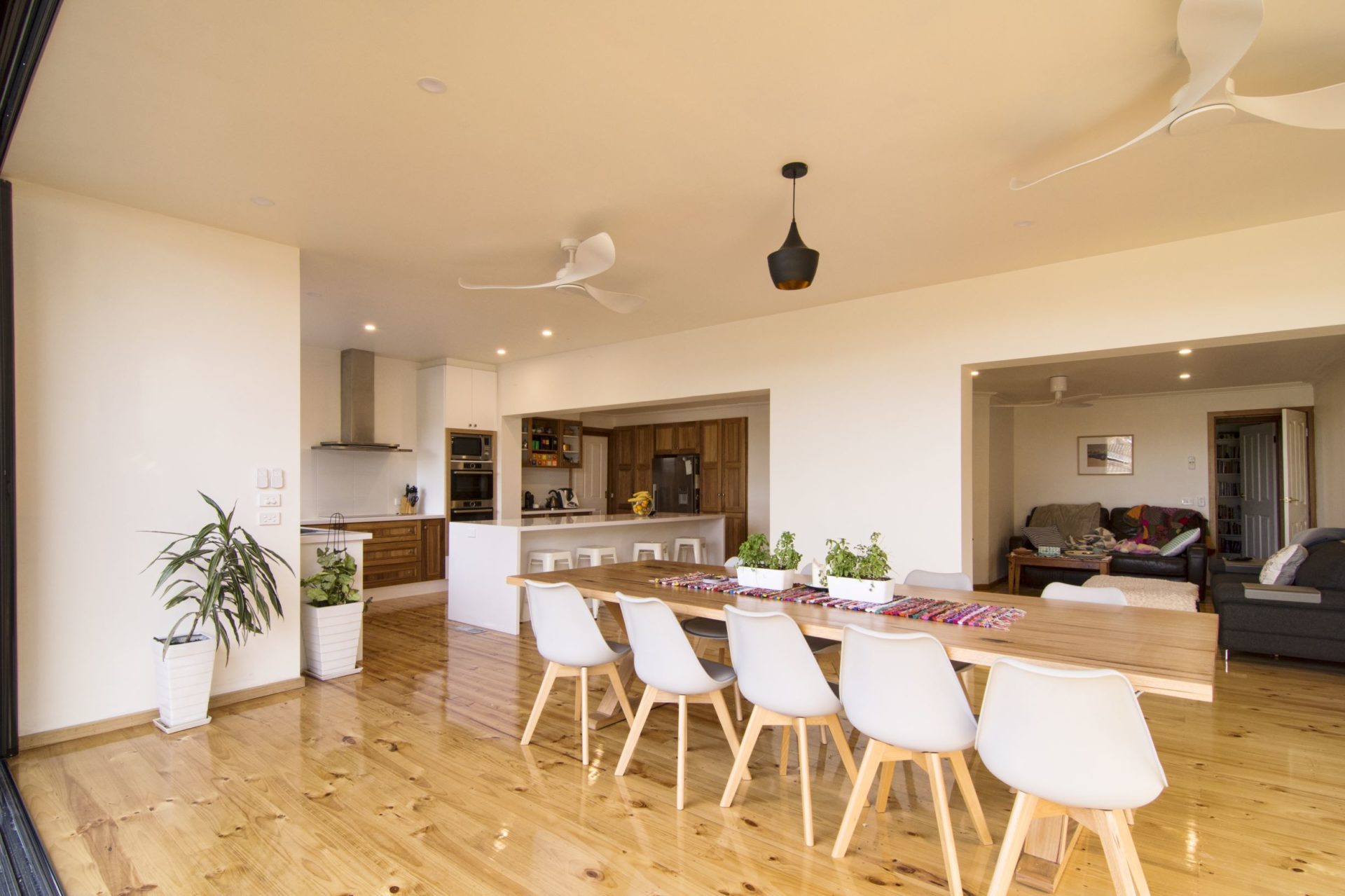
Answering: What are the heritage renovation trends shaping Melbourne in 2026?
Estimated reading time: 9 min read
The heritage renovation trends shaping Melbourne in 2026 are practical, not stylistic: adaptive reuse of difficult buildings, the shift to all-electric homes, conservation-led restraint over showy extensions, architecture and interiors designed as one, sustainability judged by comfort rather than a score, and a reshaped planning system after the 2025 Townhouse and Low-Rise Code reform. Across the inner-east — Hawthorn, Kew, Armadale, Malvern, Brighton — owners are asking better questions: not “how big an addition can I get?” but “how do I make this home work harder, cost less to run, and still feel like itself?” Drawing on BY Projects Architecture’s 35-plus years and 59 heritage approvals, here is what we are genuinely seeing in the studio, and what each trend means for a project you might be planning this year.
Trend pieces can be empty. This one is not a mood board. Each shift below is being driven by something real — a policy change, an energy bill, a maturing taste — and each has a concrete consequence for how you would brief, budget and approve a heritage renovation in 2026.
Read them as a checklist for your own thinking, not a style forecast. Here is where Melbourne’s heritage renovation is heading, and why.
Key Insights
- Adaptive reuse is moving mainstream: converting churches, warehouses and other difficult buildings into homes is now a sought-after route to a singular residence.
- Electrification is the biggest practical shift — Victoria’s policy settings are steering existing homes off gas, and heritage homes are adapting.
- Taste is moving towards restraint: conservation-led design that lets the original building lead, rather than a dominant new addition.
- The 2025 Townhouse and Low-Rise Code reshaped Clause 55, but a Heritage Overlay still governs heritage homes, so the “faster permits” headlines largely do not apply to you.
| 2026 trend | What’s driving it | What it means for your project |
|---|---|---|
| Adaptive reuse | Scarcity of character buildings; appetite for the singular | Churches, warehouses and halls become high-end homes via retain-and-insert |
| All-electric homes | Victoria’s gas-substitution policy and running costs | Heat-pump heating and hot water, sited sympathetically to the heritage fabric |
| Conservation-led restraint | “Quiet luxury”; reaction against the dominant rear box | Restore the original; let the new work be calm and secondary |
| Architecture + interiors as one | Owners wanting coherence inside and out | Joinery, materials and light designed with the architecture, not after it |
| Sustainability without dogma | Comfort and health over a certificate | Borrow the building science; keep the windows openable |
| A reshaped planning system | The 2025 Townhouse and Low-Rise Code (VC267) | Clause 55 changed, but your Heritage Overlay still governs the assessment |
Keep reading for full details below.
Table of Contents
- Adaptive Reuse Goes Mainstream
- Electrification and Real Comfort
- Restraint Replaces the Dominant Extension
- The Policy Shift Behind It All
Adaptive Reuse Goes Mainstream
The clearest trend of 2026 is that adaptive reuse has moved from a niche pursuit to a sought-after route to a one-of-a-kind home.
Character buildings are finite, and buyers who have seen enough new builds increasingly want what cannot be replicated: the volume of a former church, the honest brick and timber of a warehouse, the provenance of an old hall or bank. Converting these into homes is demanding work — light, services, thermal comfort and residential yield all have to be solved without harming the significant fabric — but the result has a presence no new construction can buy. The approach that works is consistent: retain and celebrate the heritage shell, then insert a clearly contemporary residential layer within and behind it.
This is the part of the market where a difficult building becomes an advantage rather than a liability, and it is the work we are most often asked about. Across our adaptive-reuse projects, including church conversions, the through-line is treating the building’s significance as the brief, not the obstacle. In 2026, expect more owners and developers to look hard at the awkward, the redundant and the protected, because that is increasingly where the most distinctive homes are found.
Electrification and Real Comfort
If adaptive reuse is the most visible trend, electrification is the most consequential, and it is being driven by policy as much as preference.
Victoria’s Gas Substitution Roadmap is steadily moving the state off gas. New homes face an all-electric requirement from 2027, and for existing homes, a gas hot-water system that reaches the end of its life must be replaced with an electric one from 1 March 2027 (replacing gas space heating or cooking is encouraged, not required). Rebates through the Victorian Energy Upgrades program already make the switch cheaper. For a heritage owner, this is less a constraint than a prompt to plan ahead: an efficient electric heat pump, often paired with hydronic radiators that suit the high ceilings and solid walls of a period home, delivers the kind of steady, radiant warmth these houses were always missing.
The heritage craft is in the siting. Heat-pump units, hot-water systems and any solar panels need to be placed where they do not intrude on significant elevations or the streetscape, which usually means external change still needs a planning permit. Done well, electrification lowers running costs and lifts comfort without touching the character. And it fits a view we hold strongly: comfort and quality of life are the goal, not a number on a certificate, and a well-designed heritage home should still be one you can open the windows in.
Restraint Replaces the Dominant Extension
A quieter shift, but a real one, is in taste: the era of the giant glass box dwarfing a modest cottage is giving way to conservation-led restraint.
The “quiet luxury” sensibility that has reshaped fashion and interiors has reached heritage architecture. Affluent owners increasingly want the original building to lead — its proportions restored, its detail conserved — with the new work calm, well-made and clearly secondary. A beautifully resolved rear addition that sits below the ridge and lets the period rooms breathe now reads as more sophisticated than a dominant extension competing with the home it serves. This is partly aesthetic and partly an investment instinct: the intact, restored heritage home holds its value and its appeal.
Related to this is the move to design architecture and interiors as one continuous decision. Owners have seen too many homes where a carefully restored shell is let down by a generic interior bolted on at the end. In 2026 the expectation is coherence — joinery, materials, light and spatial planning flowing from the architecture — so the home feels whole inside and out. It is, in the end, the same instinct as restraint: respect the building, and design for how people actually live in it.
The Policy Shift Behind It All
Underpinning the year is the biggest change to Victoria’s residential planning rules in a generation, and it pays to understand what it does and does not do for a heritage home.
The Townhouse and Low-Rise Code, introduced by Amendment VC267 and in operation from 31 March 2025, restructured Clause 55 to create a faster, more certain “deemed to comply” pathway for townhouses and low-rise apartments up to three storeys, and it changed long-standing neighbour-amenity standards such as overshadowing and overlooking. For most owners the headline is speed and certainty. For a heritage owner, the important point is the asterisk: a Heritage Overlay still triggers a planning permit and its own assessment, so the streamlined pathway largely does not reach you. Your project is still judged on its effect on the building’s significance, as it always was.
What the reform can change for you is the world next door — what a neighbour may now build, and how the amenity standards weigh up — which is worth understanding before you design. As ever, the value is in knowing exactly which rules bite on your specific site. That is the work we do at the very start, so a 2026 project begins on solid ground rather than on a headline.
Closing
The 2026 trends are not really about style; they are about substance. Adaptive reuse, electrification, restraint, integrated design, honest sustainability and a reshaped planning system all point the same way: towards heritage homes that are more thoughtful, more comfortable and more themselves. The owners who do best this year are the ones who plan for these shifts rather than react to them. For a closer look at how we work through them before design begins, visit our process page.
Frequently Asked Questions
Q: Is adaptive reuse really practical, or just a trend?
A: It is genuinely practical, though demanding. Converting a church, warehouse or hall into a home means solving light, services, thermal comfort and residential yield without harming the significant fabric, and it needs a planning permit under the Heritage Overlay. The reward is a residence with character no new build can replicate. It suits owners who value the singular over the standard, and it is one of the most rewarding routes to a distinctive home.
Q: Do I have to go all-electric in my heritage renovation?
A: Victoria’s policy is steering existing homes off gas, with gas hot-water systems to be replaced by electric at end-of-life from 1 March 2027 (space heating and cooking encouraged, not required), so planning for electrification now is sensible. For a heritage home, an efficient heat pump — often with hydronic radiators suited to high ceilings and solid walls — gives steady comfort. The detail to manage is siting equipment and any solar so it does not affect significant elevations, which usually needs a permit.
Q: Did the 2025 planning reform make heritage permits faster?
A: Generally not for heritage homes. The Townhouse and Low-Rise Code created a faster pathway for townhouses and low-rise development at Clause 55, but a Heritage Overlay still triggers a planning permit and its own heritage assessment. Your project is judged on its effect on significance much as before. The reform can, however, change what a neighbour may build nearby, which is worth understanding early.
Q: What’s the single biggest shift to plan for in 2026?
A: Electrification, because it is policy-driven and affects running costs, comfort and the equipment your home needs. Beyond that, the move towards restraint and conservation-led design is worth absorbing: a restored original with a calm, secondary addition tends to deliver more value and more pleasure than a dominant extension. Planning for both early keeps your project ahead of the curve rather than behind it.
Want to Learn More?
With more than 35 years across Melbourne’s heritage suburbs, BY Projects Architecture reads each trend through one question: does it make the home better to live in? The shifts that pass that test are the ones worth following.
Citations
- “Townhouse and Low-Rise Code” — Planning Victoria. Confirms the Amendment VC267 deemed-to-comply pathway at Clause 55 for townhouses and low-rise apartments up to three storeys, approved 6 March 2025 and in operation from 31 March 2025. https://www.planning.vic.gov.au/guides-and-resources/guides/all-guides/residential-development/townhouse-and-low-rise-code
- “Victoria’s Gas Substitution Roadmap” — Victorian Government (Energy). Sets out the policy moving Victoria off gas, including the all-electric requirement for new homes and the replacement of gas hot-water systems in existing homes with electric at end-of-life. https://www.energy.vic.gov.au/renewable-energy/victorias-gas-substitution-roadmap
- “Permits and approvals” — Heritage Victoria. Confirms that external change to a place in a Heritage Overlay generally requires a planning permit, which is why electrification equipment and additions must be sited with care. https://www.heritage.vic.gov.au/permits-and-approvals
These are the official Victorian sources behind the 2026 shifts: the Townhouse and Low-Rise Code for the planning reform, the Gas Substitution Roadmap for electrification, and Heritage Victoria for the permit controls that still apply.
With 35-plus years and 59 heritage approvals across Melbourne, our work is to turn the year’s noise into a clear plan for your home, so a 2026 renovation follows the shifts that matter and ignores the ones that don’t — built for living, not just for the feed.
91%
Quality Verified
This content scored 91% in the Probably Genius Publication Readiness Assessment, meeting standards for direct answers, section depth, proof points, citation quality, and AI extractability.