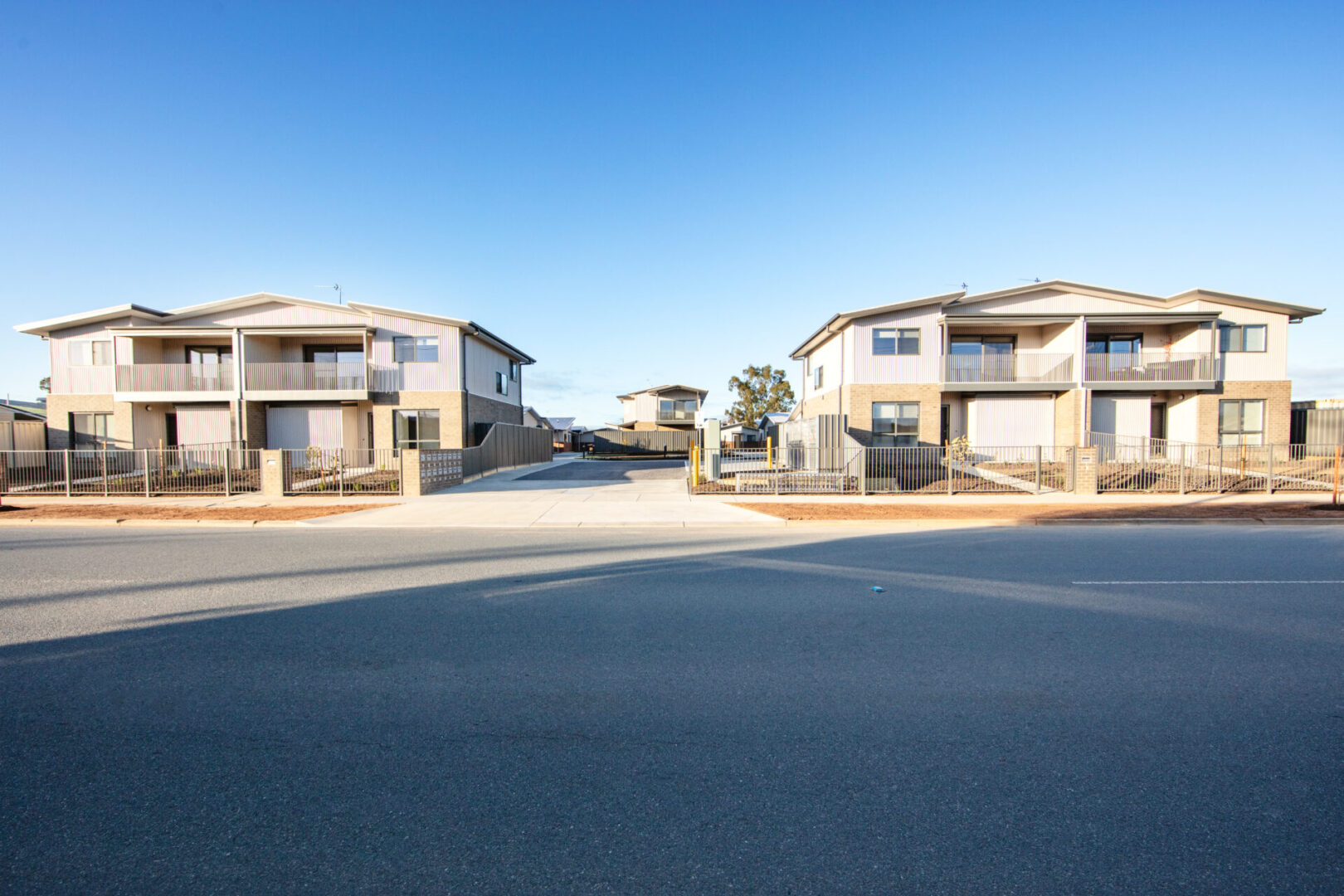
Answering: Negative gearing is changing, and why eligible new builds may still qualify for a small Melbourne investor.
Estimated reading time: 9 min read
The 2026–27 Federal Budget announced that negative gearing for residential property would be limited to new builds, so that tax support is aimed at new supply rather than at buying an existing dwelling. Treasury’s own words: from 1 July 2027, negative gearing of residential property will be limited to new builds; new builds can continue to be negatively geared; investors who buy established housing after Budget night generally cannot deduct those rental losses against other income such as wages. That is the policy Barbara was pointing at when she said you cannot buy them and negatively gear, but if you are building them from scratch, you keep the negative gearing. BY Projects Architecture is an architect, not a tax adviser. This article is general information about why small-scale new development is back in the conversation. It is not advice about your tax position. Speak to your accountant. If the site, the yield of dwellings and the construction cost are the part you need an architect for, that is a feasibility session.
Land is expensive. Construction is expensive. Holding time is expensive. Plenty of larger schemes have simply not proceeded. That is why a small investor, someone with a couple of million dollars, or three or four, not twenty, is asking whether building new dwellings and keeping them still has a tax setting attached. We sketch while we talk. We do not prepare your tax return.
Key Insights
- Treasury and the 2026–27 Budget describe a limit on negative gearing for residential property to new builds, with new builds able to continue using losses against other income, and established purchases after Budget night treated differently.
- The Treasury Laws Amendment (Tax Reform No. 1) Act 2026 (C2026A00049) received Royal Assent on 26 June 2026; Schedule 2, “Limit negative gearing for residential property to new builds,” commenced on 27 June 2026 and applies from the 2027–28 income year. Confirm your facts with an accountant. We are not that accountant.
- “Building from scratch” in this conversation means adding supply. A renovation that does not add dwellings is a different question, and a one-for-one knock-down rebuild may not qualify. The Act leaves the precise requirements for a “new residential dwelling” to be settled by legislative instrument, so confirm the current definition with your accountant before designing a project around it.
- The GST margin scheme is a separate, eligibility-heavy calculation on some property sales. It is a short conversation for your accountant, and not something we will apply for you.
| Situation (general, not advice) | What Budget / Treasury describe | What this does not mean | Who to ask |
|---|---|---|---|
| You already held the property before Budget night (7:30pm AEST, 12 May 2026) | Existing arrangements described as remaining unchanged for properties held before announcement | Not a reason to skip advice on a later sale or a later development | Accountant |
| You buy an established dwelling after Budget night | Losses described as deductible against residential property income, carriable forward, not against other income such as wages (from the new settings) | Not “no deductions exist” | Accountant |
| You build new dwellings that add supply, and keep them | New builds described as remaining able to be negatively geared | Not a planning permit, and not a yield | Accountant + architect (feasibility) |
| You renovate or extend an existing house without adding dwellings | Not the “new build / new supply” story this article is about | Do not stretch “new” to mean “new kitchen” | Accountant; architect for the building question |
Keep reading for full details below.
Table of Contents
- What the Budget and Treasury actually say
- Building from scratch is a planning and cost problem first
- GST and the margin scheme, briefly
- Where an architect belongs, and where we stop
What the Budget and Treasury actually say
On 12 May 2026 the Commonwealth announced, as part of the 2026–27 Budget, that it would limit negative gearing to new builds from 1 July 2027, “to focus tax support on new supply.” The Budget tax-reform page and Treasury’s Budget 2026–27 tax-system page are the primary public statements. They say, in substance:
- New builds can continue to be negatively geared before and after 1 July 2027.
- Properties held before announcement (7:30pm AEST, 12 May 2026) are described as exempt from the changes.
- Investors who buy established housing after 12 May 2026 can deduct losses against other residential property income, including capital gains, and can carry forward excess losses, but cannot deduct those losses against non-residential income such as wages, under the new settings.
The Treasury Laws Amendment (Tax Reform No. 1) Act 2026 received Royal Assent on 26 June 2026; Schedule 2, “Limit negative gearing for residential property to new builds,” commenced on 27 June 2026 and applies from the 2027–28 income year. The Act leaves the detailed requirements for what counts as a new residential dwelling to be set by ministerial legislative instrument, which means the working definition can be settled and refined outside the Act itself. That is one more reason none of this is a substitute for advice about your facts. The ATO publishes its own explainer of the reform; your accountant will work from the current version.
Barbara’s point was about new development: the ability to negatively gear stays attached to building new supply, not to buying existing dwellings in the same way. The 1 July 2027 date above is Treasury’s and the Budget’s, cited as such.
“New build” in the public Budget material is tied to adding supply. A search extract of the Budget tax explainer describes new builds as residential properties which genuinely add to supply, including dwellings constructed on vacant land, or where existing properties are demolished and replaced with a greater number of dwellings, and says knock-down rebuilds or substantial renovations that do not increase supply will not be eligible. Because the operative requirements sit in a legislative instrument rather than in the Budget glossy, treat every one of those examples, including whether a one-for-one rebuild or a substantial renovation qualifies, as something your accountant confirms against the current law, not as a sentence to design a project around.
This is small-investor new residential development in Victoria, read through an architect’s lens. It is not a co-living or rooming-house product.
Building from scratch is a planning and cost problem first
A tax setting that favours new supply does not rezone your block, does not remove a Heritage Overlay, and does not make the builder cheaper. The three things that have been killing feasibilities in Victoria are still land cost, construction cost, and time. We will not attach a percentage to “taxes and charges”; there is no cited figure to stand behind one.
What we can do, because it is architecture, is read whether the lot can take new dwellings at all.
- Zone and overlays: a Heritage Overlay, flooding, vegetation, parking and amenity controls can cap dwelling numbers long before anyone talks to an accountant.
- VicSmart versus standard planning: some two-dwelling proposals can be fast if they fit the class and no other trigger knocks them out. Many inner-Melbourne lots will not stay on that path. If you need the detail on how the planning clocks actually run, we have written about Melbourne planning approval timelines separately.
- Construction cost: Archicentre Australia’s 2026 Cost Guide puts new construction, including extensions to an existing building, in an indicative $2,700 to $5,100 per square metre band for a basic shell, GST included, with extras for first-floor work, bad ground and professional fees. That is not a tender. It is why “build three and keep them” is a cost conversation before it is a tax conversation.
- Practice fit: 35-plus years, 400-plus projects, 235-plus community dwellings, 10-plus councils. Greater Shepparton, when mentioned, is 20 community housing units. That is multi-dwelling experience, not a template for your tax outcome.
If the numbers only work in a spreadsheet that ignores planning time and overlay constraints, they do not work. That is the part of Barbara’s point that is architectural: development that does not proceed helps nobody, and the projects that still can proceed for a small practice are the ones whose feasibilities close.
GST and the margin scheme, briefly
Barbara mentioned that building new can also sit with GST settings, including the margin scheme. Here is the short version, and where our boundary sits.
The Australian Taxation Office describes the margin scheme as a way of working out GST on some property sales, subject to eligibility, usually so that GST is calculated on the margin rather than on the full sale price. Eligibility, written agreement before settlement, and whether you can use it at all depend on how the property was acquired and how it is being sold. If you build new residential premises for sale, GST on the sale and credits on construction costs are their own ATO topic.
We are not going to tell you that you “save the GST.” We are not going to run a margin-scheme calculation. If your accountant says the scheme is relevant to a sale of new dwellings, that sits in their scope. If you are building dwellings to keep as a rental, the GST position may be different again. Take the ATO pages to the accountant. Do not take this paragraph to the bank.
The ATO margin-scheme page is listed in the citations.
Where an architect belongs, and where we stop
The right sequence, for a small investor who is actually considering building new dwellings in Melbourne or elsewhere in Victoria, is not “find a tax trick, then draw a building.” It is:
- Accountant: does the current law, as it applies to you, still make new-build rental losses usable in the way you hope, given your other income, your structure and your timing?
- Feasibility with an architect: will the lot yield the dwellings you are imagining, through planning, overlays and a construction cost you can fund?
- Only then: design, permits, documentation, a builder.
We stop at the edge of tax advice. We will not interpret the Act for you, name your structure, or tell you what you can deduct. We will tell you, in a 45-minute feasibility session, whether the site looks like three dwellings, or one, or none, and what the overlay and the likely construction band imply. Barbara sketches with you, not for a brochure.
Leave with two bookings, not one: your accountant, and a feasibility session.
Closing
You cannot treat an established purchase and a new-build-from-scratch project as the same tax object under the settings Treasury has described. Building new dwellings that add supply is the path the public material still ties to negative gearing. That path still has to survive planning, overlays and construction cost. We will help you read the site. We will not do your tax. Speak to your accountant, then sit down with us if the lot is real. Our process is how that conversation turns into a project, or into an honest no.
Frequently Asked Questions
Q: Can I still negatively gear if I buy an existing Melbourne house as an investment?
A: Not as a sentence we will certify. Treasury describes a limit on negative gearing for residential property to new builds, with different treatment for established purchases after Budget night, and grandfathering for properties already held. Ask your accountant about your dates and your facts. Do not use this page as a ruling.
Q: If I build new units and keep them, do I “keep the negative gearing”?
A: That is the policy intent described by the Budget and Treasury for eligible new builds. Whether your project is an eligible new build, and whether your structure can use the losses, is accountant work. Whether the lot can take the dwellings is architect work.
Q: Is this already law, or still a Budget announcement?
A: It is law. Announced in the 2026–27 Budget, the Treasury Laws Amendment (Tax Reform No. 1) Act 2026 received Royal Assent on 26 June 2026; Schedule 2 commenced on 27 June 2026 and applies from the 2027–28 income year. Treasury describes the new-build limitation as applying from 1 July 2027. Confirm the current status with your accountant. We are not a substitute for that confirmation.
Q: Does the GST margin scheme mean I avoid GST if I build?
A: No sentence that short is safe. The margin scheme is an ATO method for calculating GST on some eligible property sales. It is not automatic, and it is not architectural advice. Short section, long conversation with an accountant.
Want to Learn More?
If the question is whether this lot will take new dwellings, that is us. If the question is what you can deduct, that is not.
Citations
- Tax reform, Budget 2026–27 (Australian Government). Official Budget page: the Government will limit negative gearing to new builds from 1 July 2027; existing arrangements described as unchanged for properties held before Budget night; new-build investors still able to deduct losses from other income. https://budget.gov.au/content/04-tax-reform.htm
- Budget 2026–27 tax system changes, The Treasury. Same policy in Treasury’s words, including the 7:30pm AEST 12 May 2026 announcement time and the treatment of established purchases after that date. https://treasury.gov.au/policy-topics/taxation/budget2026-27
- Treasury Laws Amendment (Tax Reform No. 1) Act 2026, Federal Register of Legislation, C2026A00049. Royal Assent 26 June 2026; Schedule 2, “Limit negative gearing for residential property to new builds,” commenced 27 June 2026 and applies from the 2027–28 income year. https://www.legislation.gov.au/C2026A00049
- GST and the margin scheme, Australian Taxation Office. Official ATO landing page for margin-scheme eligibility and calculation. https://www.ato.gov.au/businesses-and-organisations/gst-excise-and-indirect-taxes/gst/in-detail/your-industry/property/gst-and-the-margin-scheme
ATO tax-reform explainer: https://www.ato.gov.au/about-ato/new-legislation/in-detail/individuals/tax-reform-boosting-home-ownership-reforming-negative-gearing-and-capital-gains-tax